In this exercise, two people use two licence-free radios to practise the voice procedure we use in emergencies: listen before talking, keep it short, spell out anything difficult and log every contact. At the end, they will have completed a full communication, from the first call to the entry in the Base log.
Time: about 1 hour · People: 2 · Prior knowledge: none
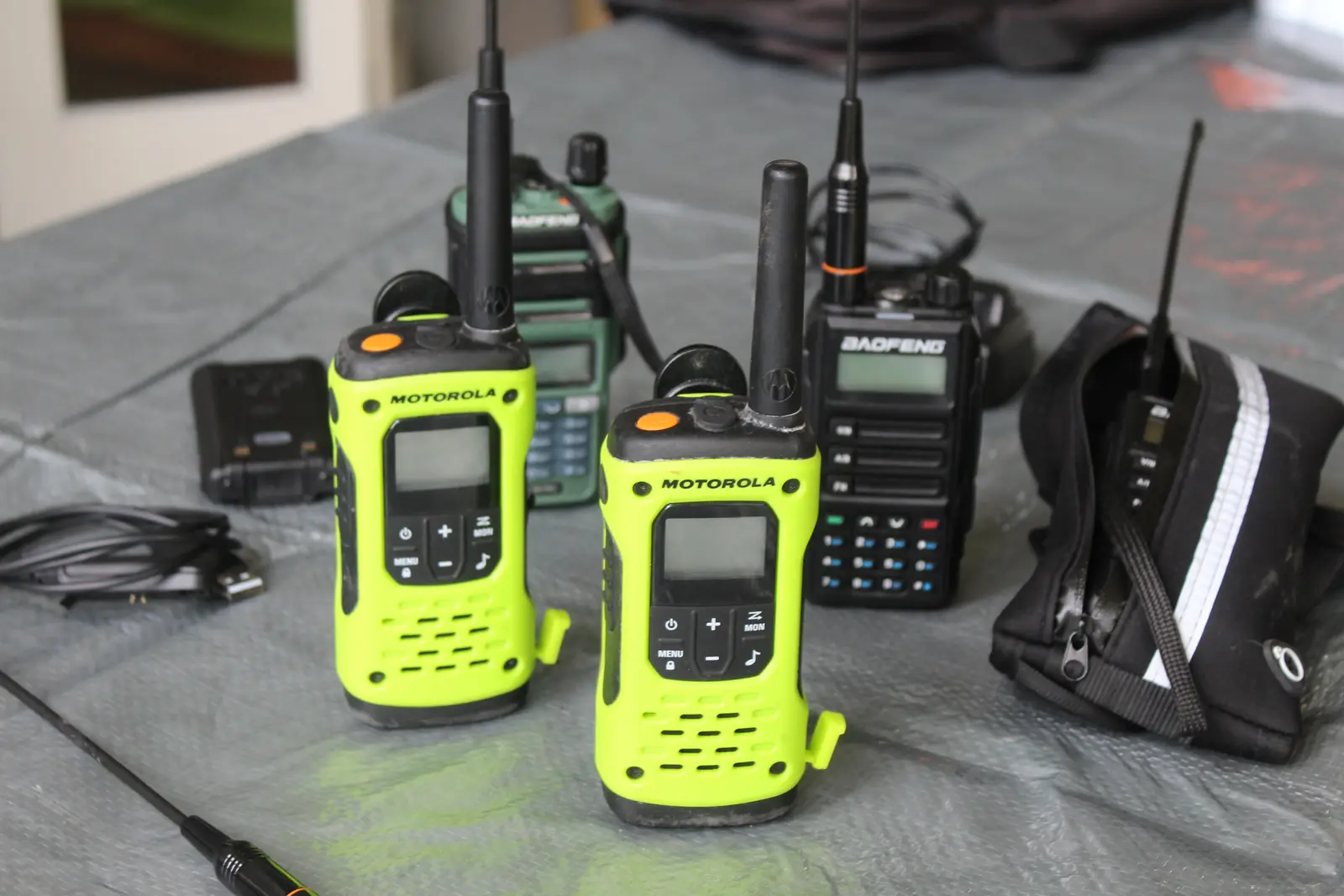
You will need
- two licence-free radios (walkie-talkies) certified by Anatel, with charged batteries;
- paper and a pencil for the log;
- the phonetic alphabet list, printed or on a phone.
Use licence-free radios. Programming an amateur radio, such as a Baofeng, to the licence-free channels works technically, but it is not allowed (see Radio categories in Brazil and the PACE model).
1. Make both radios match
- Turn on both radios and set them to the same channel, following the device manual.
- Set the volume to a medium level.
- Side by side, press the talk button (PTT) on one radio and say “test”. Check that the other one receives it. Then swap.
2. Agree on roles
- Person A plays the Base: stays put and logs the contacts.
- Person B plays the Field: walks away and calls the Base.
- Agree on a scheduled check-in time, for example every 5 minutes during the exercise.
3. Make the first call
Person B moves a few metres away and calls the Base following the procedure:
- Listen before talking. Wait a few seconds so you do not talk over another transmission.
- Press, wait, talk. Press the PTT, wait one second and speak with the radio about 5 cm from your mouth, without shouting.
- Say who is calling and who is being called: “Base, this is Field 1”.
- Release the PTT and wait for the answer: “Field 1, this is Base, go ahead”.
4. Send a complete message
Person B makes up a simple situation and gives the message in order:
who is calling → where they are → what happened → how many people → what they need
“Base, this is Field 1. Flower Street, near the school. House cut off by water, three people, one elderly. We need a boat. Over.”
Person A repeats the key points to confirm (“Field 1, copy: Flower Street, three people, boat”) and writes it down.
5. Spell out a difficult name
- Person B chooses a street or person’s name that is hard to understand.
- They spell it with the phonetic alphabet: Alfa, Bravo, Charlie…
- Person A writes it down letter by letter and reads it back.
6. Practise a priority call
- Person B starts the call with “break break” or “emergency” before the message.
- Anyone listening clears the channel and waits for the urgent message to finish.
7. Move away and go higher
- Person B keeps moving away and calling at each scheduled check-in, until the answers start to fail.
- At that point, they find a slightly higher spot, such as a stair, a step or a small mound, and call again.
- Compare: height usually gains more than doubling the power.
8. Close the log
Person A reviews the log sheet. Each contact should have the time, who called, position and situation.
What you learned
You made a radio communication the way it needs to happen in an emergency: short, in the right order, spelled out when needed and logged. In the field, the same procedure applies to licence-free, CB and amateur radios, as shown in the guide How to operate the radio in an emergency.