An emergency communication kit is only useful to a community organisation if it can buy it, maintain it and repair it without depending on the team that put it together. This page explains what weighs in this calculation: where each part can be bought, what the kit’s only monthly cost is, why batteries are the main expense and what changes when the equipment uses free software.
The prices quoted were checked on 14 October 2026, only on manufacturers’ official websites and in shops. Prices change every week and need to be checked before any purchase.
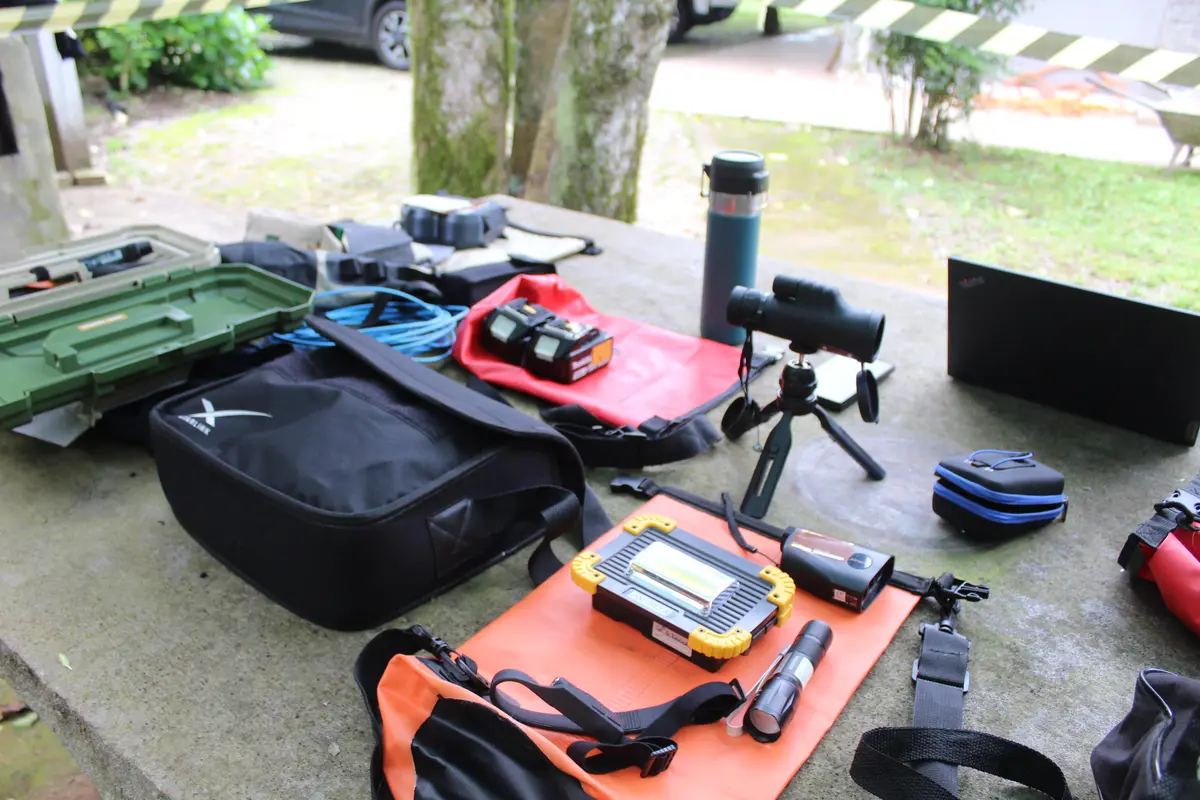
Why is cost a question of autonomy?
After a flood, a landslide, a windstorm or a fire, the community that stayed in the territory needs to keep communicating long after the outside teams have left. If a part breaks and can only be replaced by the technical team that brought the kit, communication stops along with it.
That is why, when choosing the technologies, the project asked three questions about each part. The answers helped decide what goes into the kit and what stays out.
| Question | Why it matters |
|---|---|
| Can it be bought in Brazil? | A part that only exists abroad can take weeks to arrive. After a climate disaster, nobody can wait that long to replace broken or lost equipment. |
| How much does it cost to keep it running over the years? | The purchase price is only the beginning. Subscriptions and batteries weigh on a community organisation’s budget every year, including the years without an emergency. |
| Who can update and repair it? | If only the manufacturer or the team that brought the kit can work on the equipment, the community depends on someone from outside to keep communication running. |
Can everything be bought in Brazil?
Almost everything. The satellite internet antenna, the Wi-Fi access points and the handheld radios are available in Brazilian retail. An outdoor access point cost about R$ 630 when paid upfront.
LoRa nodes are the exception. They are cheap, 18 to 45 US dollars in the manufacturers’ official shops, but most of them come from abroad. Delivery takes 10 to 30 days and the 915 MHz version, the one used in Brazil, is often out of stock. Dollar prices do not include shipping or import taxes.
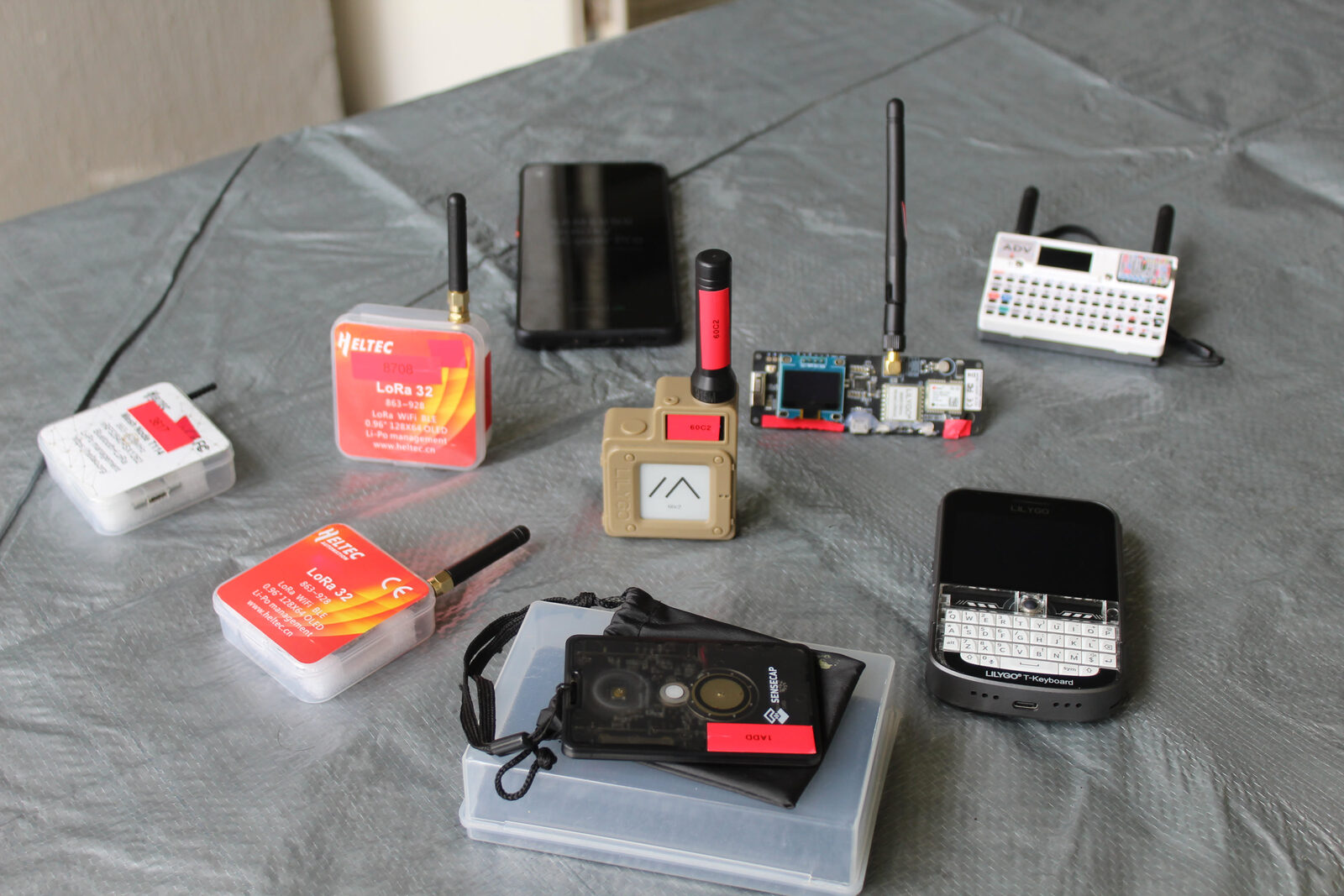
This leads to two practical decisions. The first is to keep spare LoRa nodes, because in an emergency there are not 30 days to wait for a delivery. The second is to look for reliable Brazilian resellers, always checking that the listing is for the 915 MHz version.
Why check Anatel certification?
Equipment that transmits by radio needs Anatel certification to be sold and used in Brazil. Some manufacturers make this clear: Motorola states that, in its licence-free radio range, only models ending in BR meet the rule (official notice). For other models, such as many imported radios and LoRa nodes, certification does not appear on the sales pages.
Before recommending a model to a partner organisation, the certificate needs to be checked in Anatel’s system. This matters even more for those who work with activists and human rights defenders, who cannot be exposed to seizure or fines for using non-compliant equipment.
What is the kit’s only monthly cost?
The satellite internet subscription. The other technologies have no monthly fee: the access points, the radios and the LoRa nodes run without paying anything after purchase.
The subscription brings a dilemma. Pausing the plan outside emergencies can cut the cost to about a third, if the manufacturer allows pausing. But reactivation depends on an account, a card and internet access, which may be missing precisely on the day of the climate disaster. That is why the protocol needs to state, before the emergency, who reactivates the plan and how.
Because the antenna is bought once and used for several years, it is worth comparing the scenarios over a longer period. Over three years, the calculation looks like this:
| Scenario | Monthly fees per year | Total over three years |
|---|---|---|
| Plan active all year | 12 | antenna price + 36 monthly fees (12 × 3) |
| Plan active only 3 months a year | 3 | antenna price + 9 monthly fees (3 × 3) |
Why are batteries the main expense?
Almost everything in the kit runs on batteries: radios, LoRa nodes, power banks and the Base battery. They wear out over time and need to be replaced. And what shortens a battery’s life the most is not use in the field. It is heat and being stored discharged.
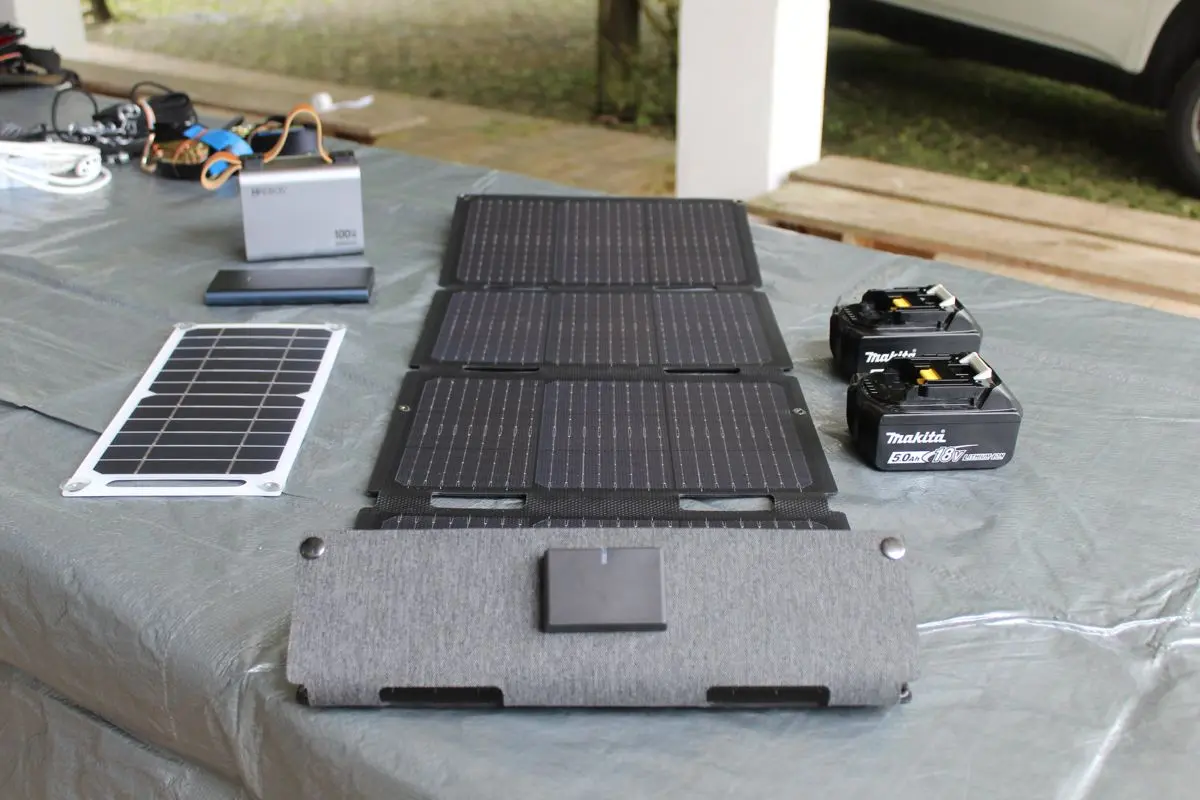
Some reference points help with planning:
- Heat: in lead-acid batteries, every 10 °C above 25 °C halves the service life, according to Moura’s technical manual. Storing the kit in a ventilated, shaded place is worth more than any replacement.
- Storage: Anker recommends recharging power banks at least every 3 months and storing them between -10 °C and 35 °C (Anker’s frequently asked questions). As a reference, a lithium power bank lasts 300 to 500 full charge cycles.
- Fake batteries: 18650 cells, used in some LoRa nodes, appear on marketplaces with capacities above about 3,500 mAh. These listings are usually fake. It is better to choose cells from an identified manufacturer, with a datasheet.
- Ordinary batteries: radios that take AA batteries, such as the kit’s licence-free radios, can be powered with what is sold in any shop in the territory.
That is why the project proposes a routine every three months: charge and test the whole kit, recording what was done. It is a simple task that can be taken on by a volunteer or by a community group in the territory. It avoids discovering a dead battery on the day it is needed.
What changes when the equipment uses free software?
The Wi-Fi access points run OpenWrt and LibreMesh. The LoRa nodes run Meshtastic. All three are free software: they can be updated without paying for a licence, without creating an account and even without internet access. Active communities around the world publish fixes and new versions.
The handheld radios and the satellite antenna depend on the manufacturer’s closed software. The channels of the imported radios can be programmed with CHIRP, free software, but the radio’s internal software cannot be replaced. The satellite antenna only updates with an active account and plan.
| Layer | Software | Who can update it |
|---|---|---|
| Local Wi-Fi | OpenWrt and LibreMesh (free) | Anyone with the guide, no licence |
| LoRa messages | Meshtastic (free) | Anyone with the guide, no licence |
| Handheld radios | Manufacturer’s closed software | Channels via CHIRP; internal software, only the manufacturer |
| Satellite internet | Manufacturer’s closed software | Only the manufacturer, with an active account and plan |
This difference has a practical consequence. Satellite internet is the only part of the kit that can be switched off by an outside decision. The layers with free software are precisely the ones a community can maintain, adapt and reproduce on its own. That is why the kit is designed so that the radio, the LoRa messages and the Wi-Fi network work even without satellite internet.
Updating is also a form of maintenance. Network software receives security fixes frequently. Keeping the devices up to date is part of looking after the kit.
What does this mean for those who will use the kit?
The Tridecs kit is viable for organisations with few resources, with three precautions: keeping spare LoRa nodes because of importing, agreeing in advance who looks after the satellite internet subscription and checking the certification of each piece of radio equipment. With a simple battery care routine, the rest of the kit can last for years with no monthly cost.