In this exercise, two people measure the distance between two points in three different ways and look at what lies on the path between them. At the end, they will have a filled-in sheet and will know how to do a real Line of sight check in the field.
Time: about 1 hour · People: 2 · Prior knowledge: none
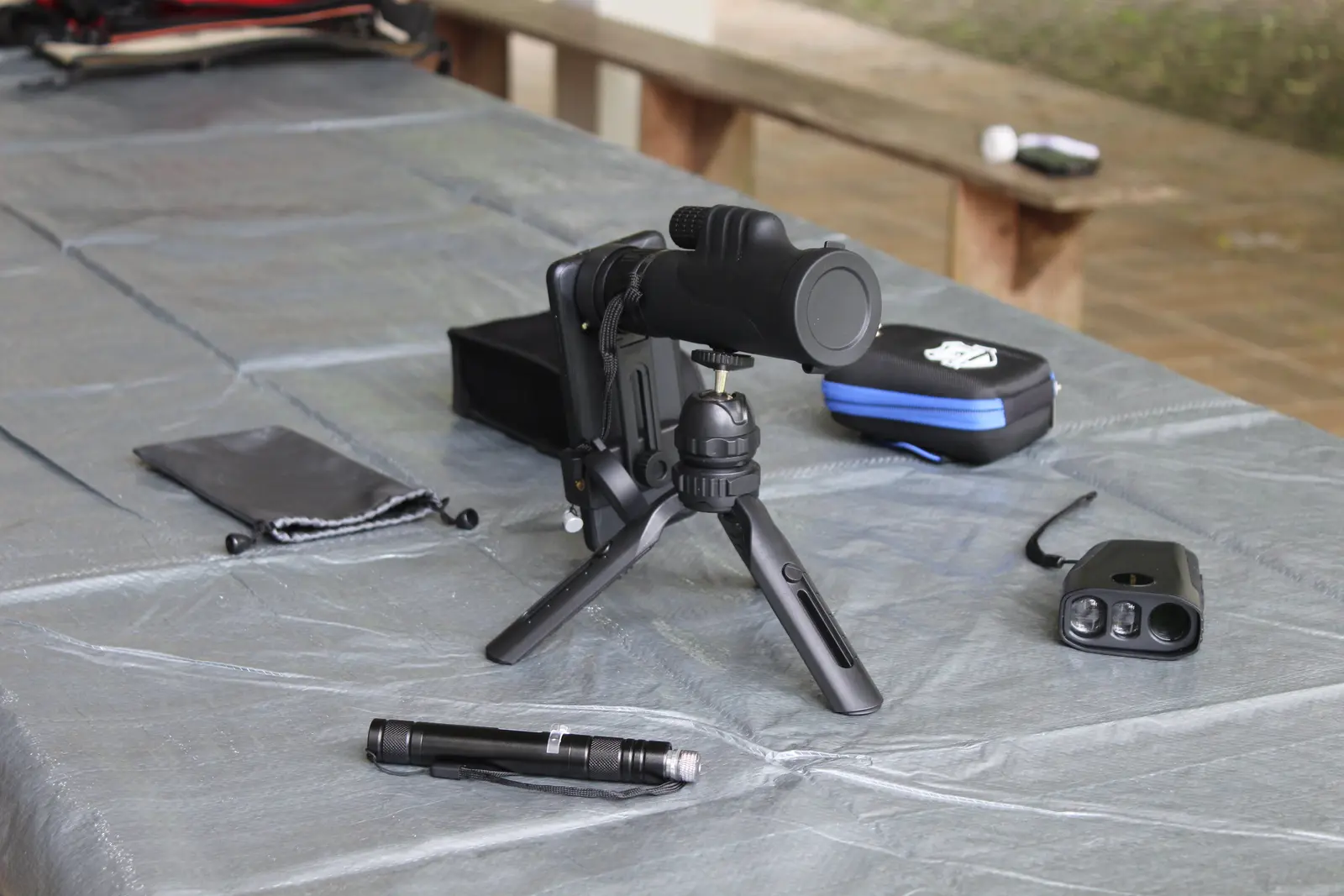
You will need
- a measuring tape of 50 m or more (it can be borrowed);
- a rangefinder, a device that measures distance by aiming at a target;
- a telescope, spotting scope or binoculars;
- a phone with GPS and a map app that works offline;
- a green laser pointer (optional);
- the line-of-sight sheet, printed or copied on paper, and a pencil.
1. Make your pace ruler
- Stretch out the tape and mark 100 m on the ground.
- Walk from start to end at a normal pace. Count one each time your right foot touches the ground. Each count is a double step.
- Repeat three times and take the average.
That number is your personal ruler: how many double steps you need to walk 100 m. It needs no battery. The method is taught by scout groups (in Portuguese).
2. Choose the two points
- Person A stays put. That spot plays the role of the Base.
- Person B walks away, preferably passing a tree, a pole or another light obstacle, counting double steps along the way.
- Person B stops and writes down the number of steps.
3. Measure with the rangefinder
- Person A aims the rangefinder at person B and writes down the distance shown.
- Together, work out the distance from the steps: steps counted × 100 ÷ your ruler.
- Compare the two values. A difference of a few metres is normal.
4. Record the position on the phone
- Each person opens the map app and waits for the position to stop jumping around.
- Write down the latitude and longitude of both points.
- Use the app’s distance tool, if it has one, to see the distance between them.
Now you have three measurements of the same stretch: steps, rangefinder and map.
5. Look along the path
- Person A looks through the scope towards person B.
- Write down everything on the path: branches, wires, roofs, signs, cars.
- For each obstacle, note roughly how far away it is and whether it is above, at or below the line between the two people.
6. Mark the point with the laser (optional)
Do this step at dusk, when the laser dot is visible.
- Person B holds a clipboard or another light surface at chest height.
- Person A points the laser at the clipboard.
What you learned
You measured a distance in three ways and saw that the path between two points is rarely empty. In the field, you will repeat this sequence faster to decide whether a spot can host an access point. That is what the guide How to check line of sight before installing an access point shows.