In this series of Project Journals, we present the technologies we are investigating as part of a toolkit for rapid response to incidents and climate disasters. In the journal on the drone, we saw how to look at the territory from above. In this journal, we look up for another reason: to find, in the sky, the internet that disappears when the mobile phone masts go down.
Why look for internet in the sky?
In a flood, the water knocks out the power and the mobile phone masts stop working. In a landslide, the earth breaks the internet cables that run along the road. In a windstorm, mobile phone towers can fall. In a fire, the flames burn poles and cables. In all these cases, the team that arrives to help is cut off from the outside world. It can talk to people nearby by radio, but not to the response coordination, the humanitarian aid organisations or the support networks that are far away.
Internet satellites solve this problem because they do not depend on anything on the ground apart from the antenna itself. The older ones are very far from the Earth: the signal takes a long time to go and come back, and the antennas are large. LEO satellites, in low Earth orbit, are much closer. The signal’s path is shorter, and the antennas can be small enough to fit in a backpack.
Which antenna did we choose and why?
In the project, we used the Starlink Mini. According to the manufacturer, it uses on average 25 to 40 W and can be powered by batteries and by power banks with 100 W USB-C. This low consumption weighed in the choice: an antenna that runs on a portable battery can go wherever the team goes, without a generator.
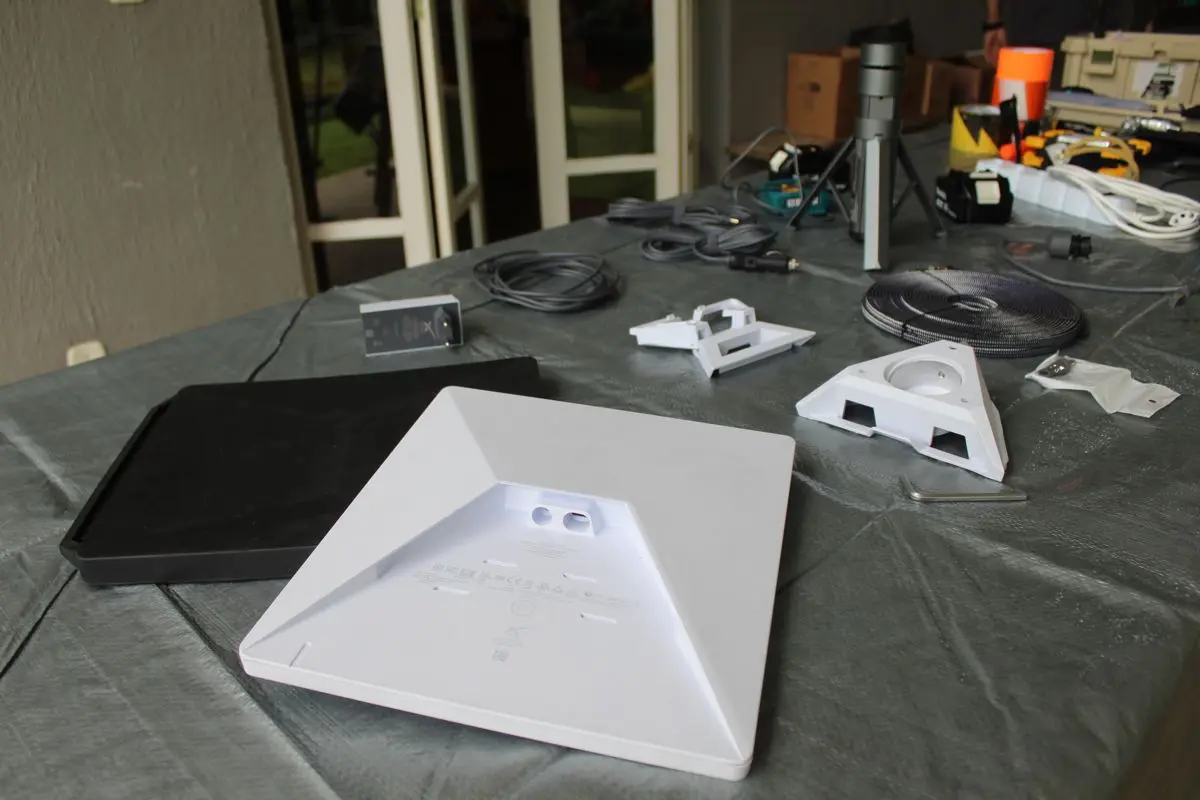
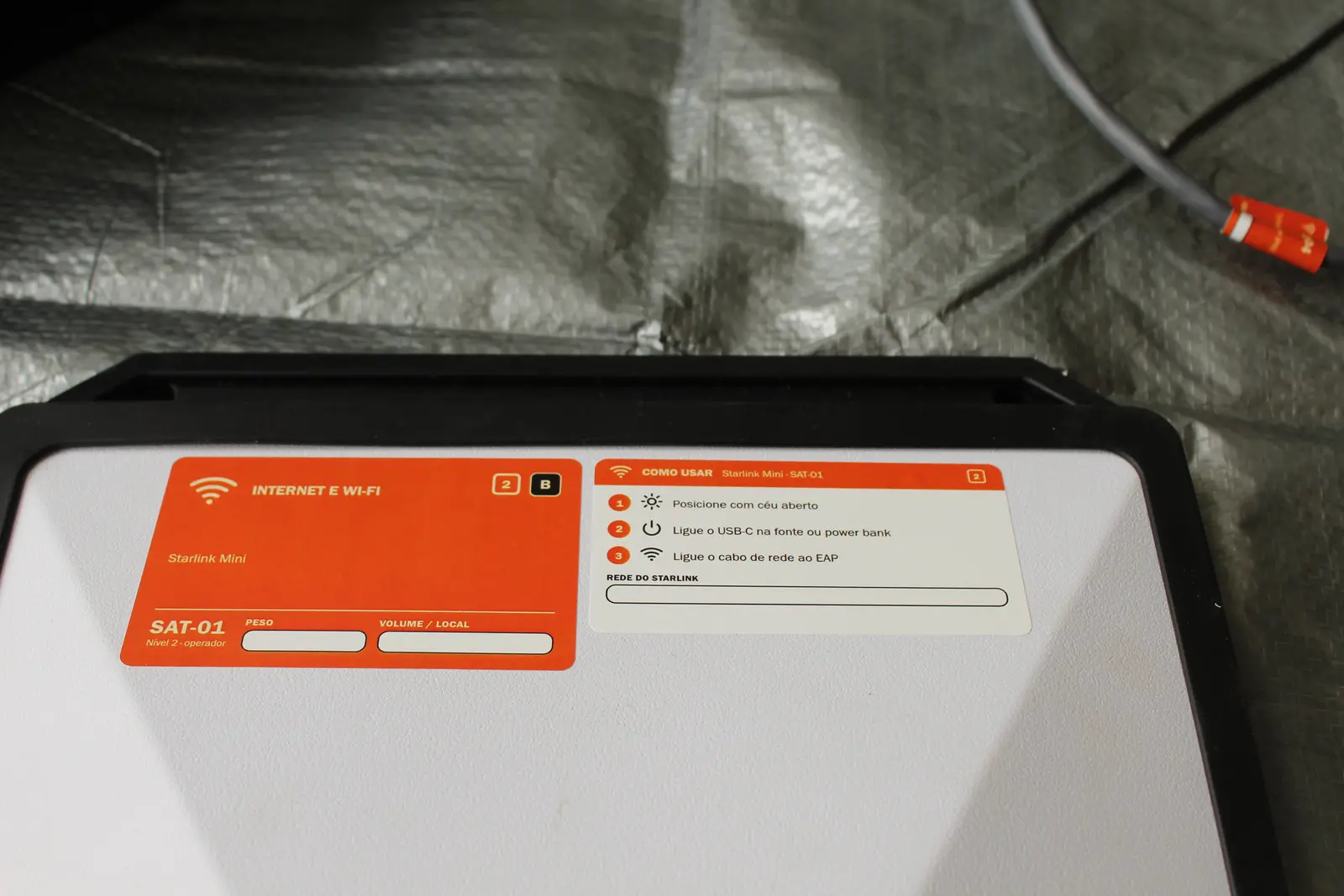
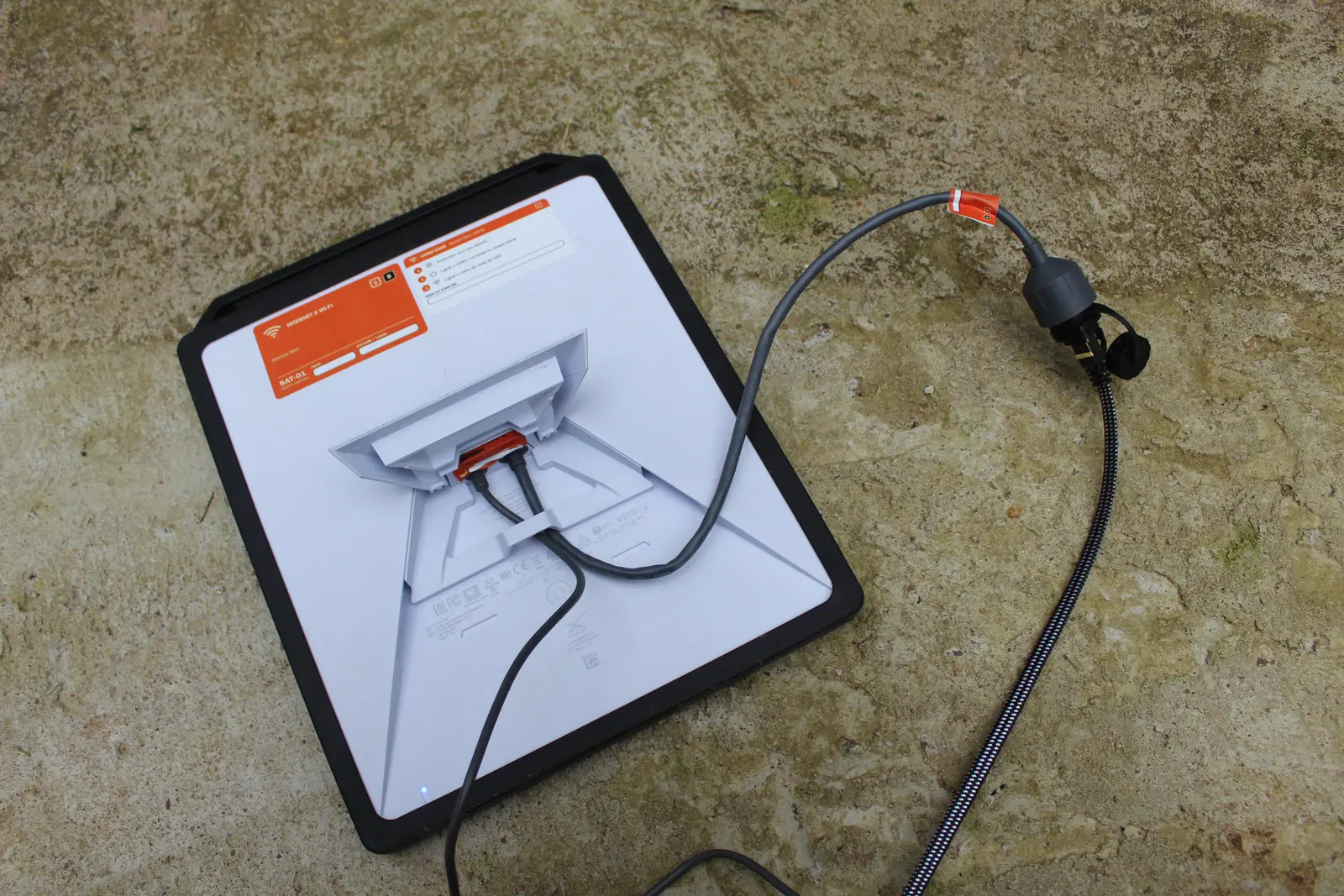
In the kit, the antenna was given the orange sticker of the internet and Wi-Fi function, with the first steps to switch it on. We explain how this system of colours and codes works in the journal How do you make a kit anyone can use?
What was the hardest dilemma?
Satellite internet is the layer that most extends the Base’s reach. But it is also the only one in the kit that depends on a private company, a monthly subscription and closed software. It is the only one that can be switched off by an outside decision.
Going without it would mean leaving the Base cut off from the outside world. Depending only on it would mean betting the whole response on something the community does not control. The decision was a middle ground: satellite internet goes into the kit to extend the reach, but local communication does not need it in order to work. Radio, LoRa messages, the Wi-Fi network and power need to work without it.
Cost brought another dilemma. The subscription is the only significant monthly cost of the kit. Pausing the plan outside emergencies can make it cheaper, but reactivation depends on an account, a card and internet access, which may be missing precisely in a climate disaster. That is why who reactivates the plan, and how, needs to be agreed beforehand.
How did the test go?
The test took place in the field in Rio Grande do Sul, in an open area near the Base. The team placed the antenna on the ground, tilted towards the sky. Then they kept changing the power source to see which ones kept it running.
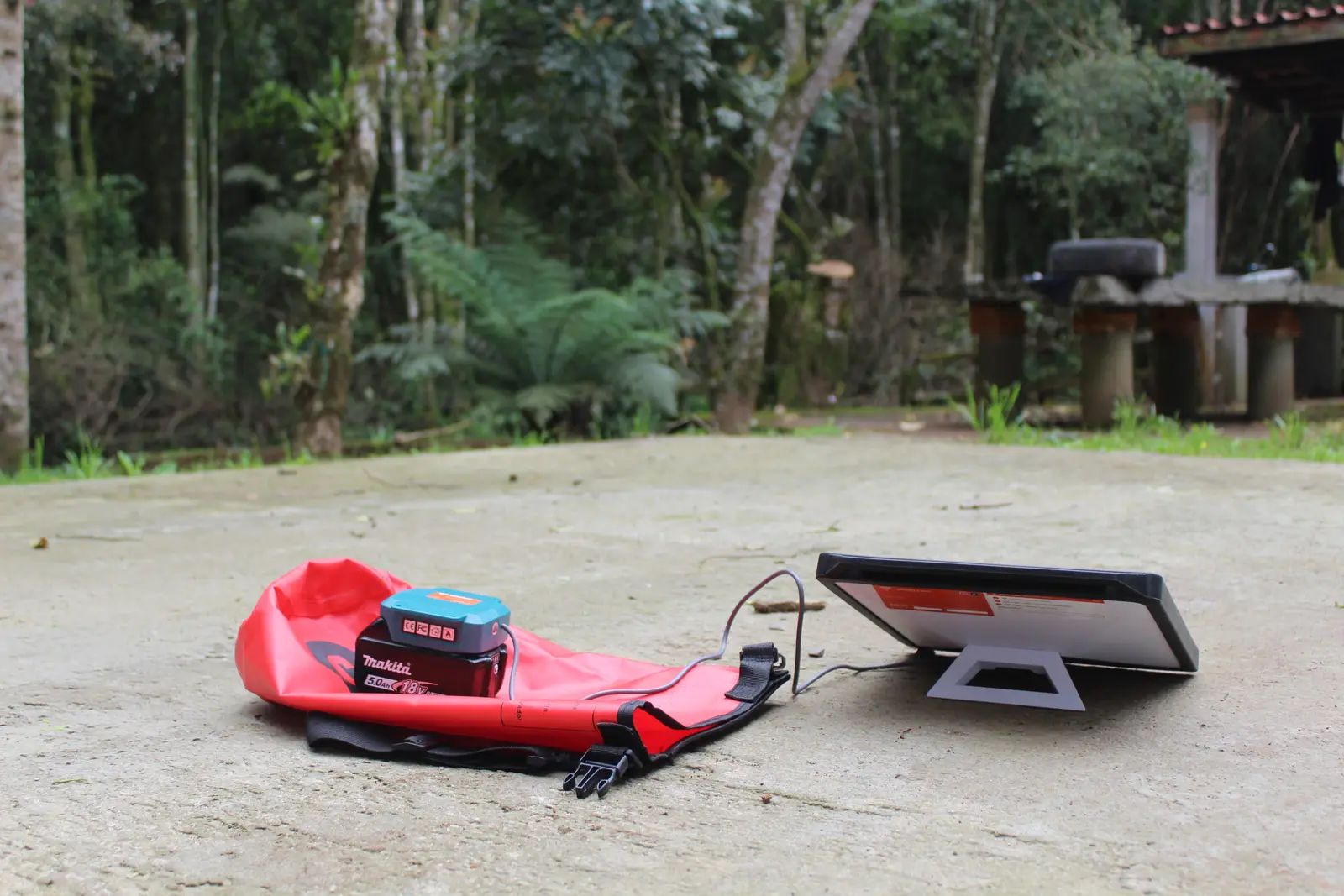
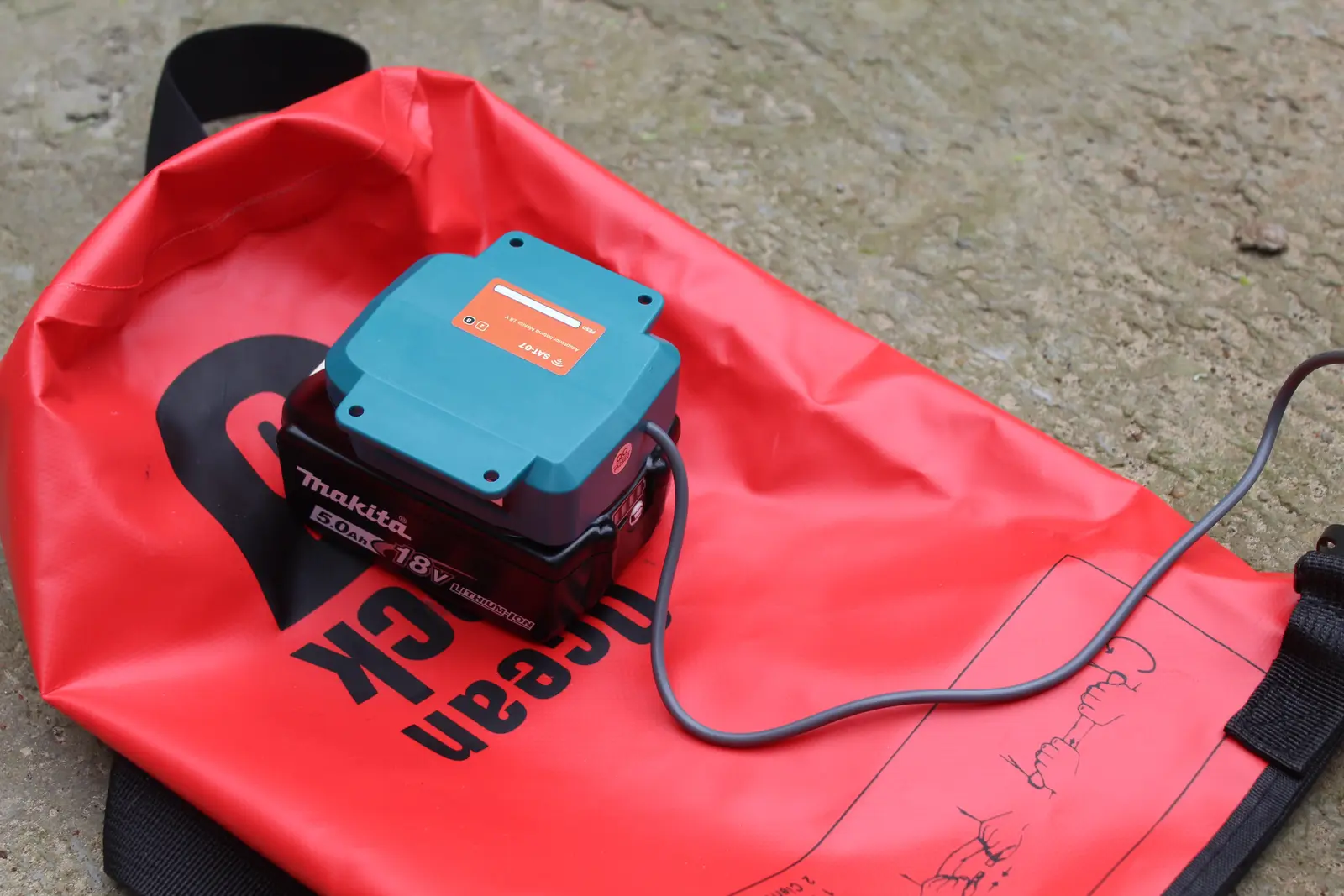
One of the sources was an 18 V tool battery, of the kind used in drills, connected to the antenna through an adapter. It was a deliberate choice: many response teams and community groups already have tools with these batteries. They can be recharged and swapped in the field.
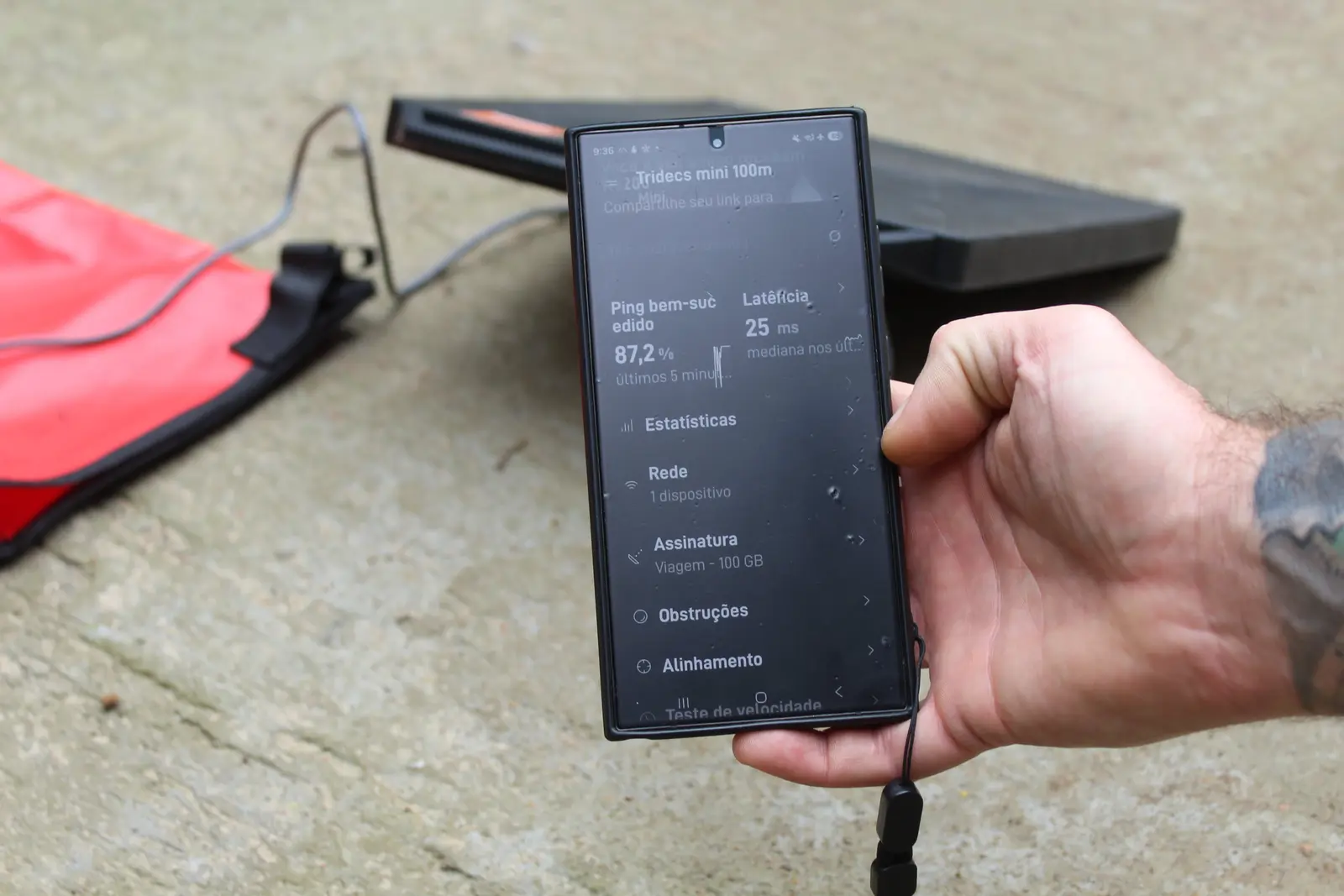
Using the manufacturer’s app, the team followed the connection and checked whether there were obstructions in the sky. When the photo was taken, the app showed a median latency of 25 milliseconds, the time a request takes to go and come back. That is a low value, similar to a fixed internet connection.
What went well?
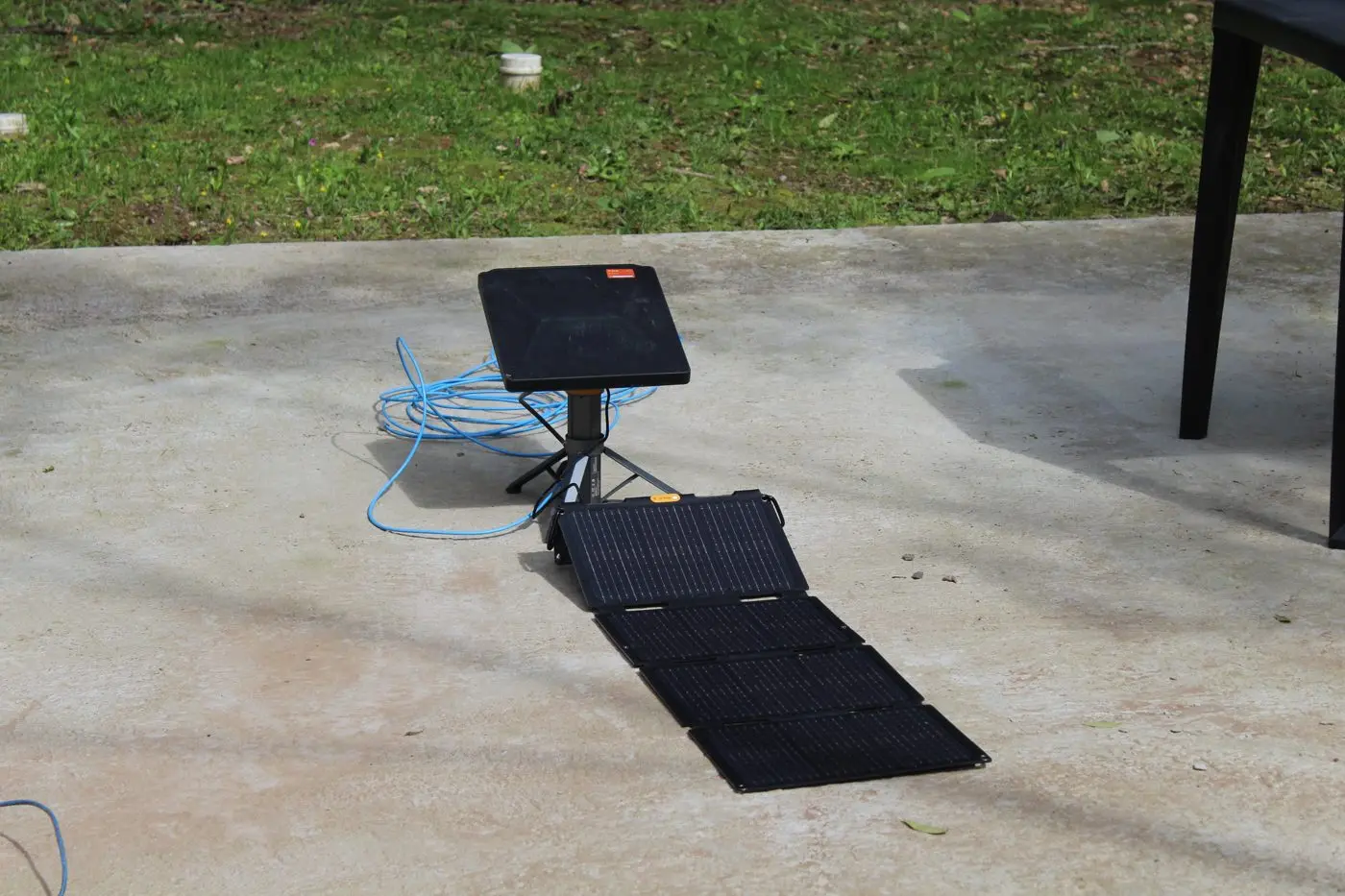
The antenna was stable with the tool battery, with the folding solar panel and with a tripod power bank recharged by the sun. This makes it possible to take internet into the field without a generator and without a socket.
The internet reached phones through the Base’s Wi-Fi network without delay. And the captive portal began telling people who connected that the network had internet.
And what went wrong?
With a 100 W power bank and a 1-metre cable, the antenna kept switching on and off non-stop. The battery is probably at the limit of the power the antenna asks for at its peaks, or the cable loses power along the way. The decision was to take this combination out of the kit.
The test also brought back a limit that no battery solves: the antenna needs open sky. Not every safe place for the Base has a sky free of trees and roofs. In a fire, an open place may be exposed to the flames. In a landslide, a clearing may be the very area that was hit. Choosing where to put the antenna means choosing between the best signal and the safest place. Safety comes first.
Why does it come first when setting up the Base?
In the kit’s draft protocol, satellite internet is switched on right at the start, together with power. Only after a phone can open a web page does the team switch on the Wi-Fi network and fill in the portal. The local network spreads the internet to the phones around it, but it is the antenna that brings that internet into the territory.
Who benefits from this connection?
Search and rescue teams can talk to the response coordination and receive official alerts. Humanitarian aid organisations receive information from the territory about what is missing and where. Affected people who reach the Base can let their families know they are safe. And the Base becomes the point from which radio and LoRa messages go out.
Even so, it cannot be the only layer. In the field, voice radio, LoRa messages, the Wi-Fi network with free software and the kit’s own power worked without depending on it. This is the logic of the PACE model: if satellite internet goes down, the team carries on with the other layers.
To go further
See you next time!