In this series of Project Journals, we present the technologies we are investigating as part of a toolkit for rapid response to incidents and climate disasters. In the journal on satellite internet, we saw that the antenna only stayed on with some power sources. In this journal, we look at what supports every piece of the kit: power.
What happens when everything goes down at once?
In a flood, the power grid is usually the first thing to go down. Soon after, the mobile phone masts run out of power or are hit by the water. In a landslide, poles slide down together with the slope. In a windstorm, trees fall onto the wires and whole neighbourhoods are left in the dark for days. In a fire, the grid may be switched off on purpose to prevent new outbreaks. Those who arrive to help find a territory that is dark and silent.
This is where the idea of Off-grid communication comes in: communication that works outside the usual networks, with its own power and its own paths. Without power, no other layer of the kit works. The radio runs flat, the messaging device switches off and the satellite antenna shuts down.
How much can power weigh?
The first dilemma in the design was between autonomy and weight. A large panel with a heavy battery keeps many devices running for longer, but you cannot carry it on your back through a flooded area. Folding panels and power banks are light, but they power only a few devices at a time.
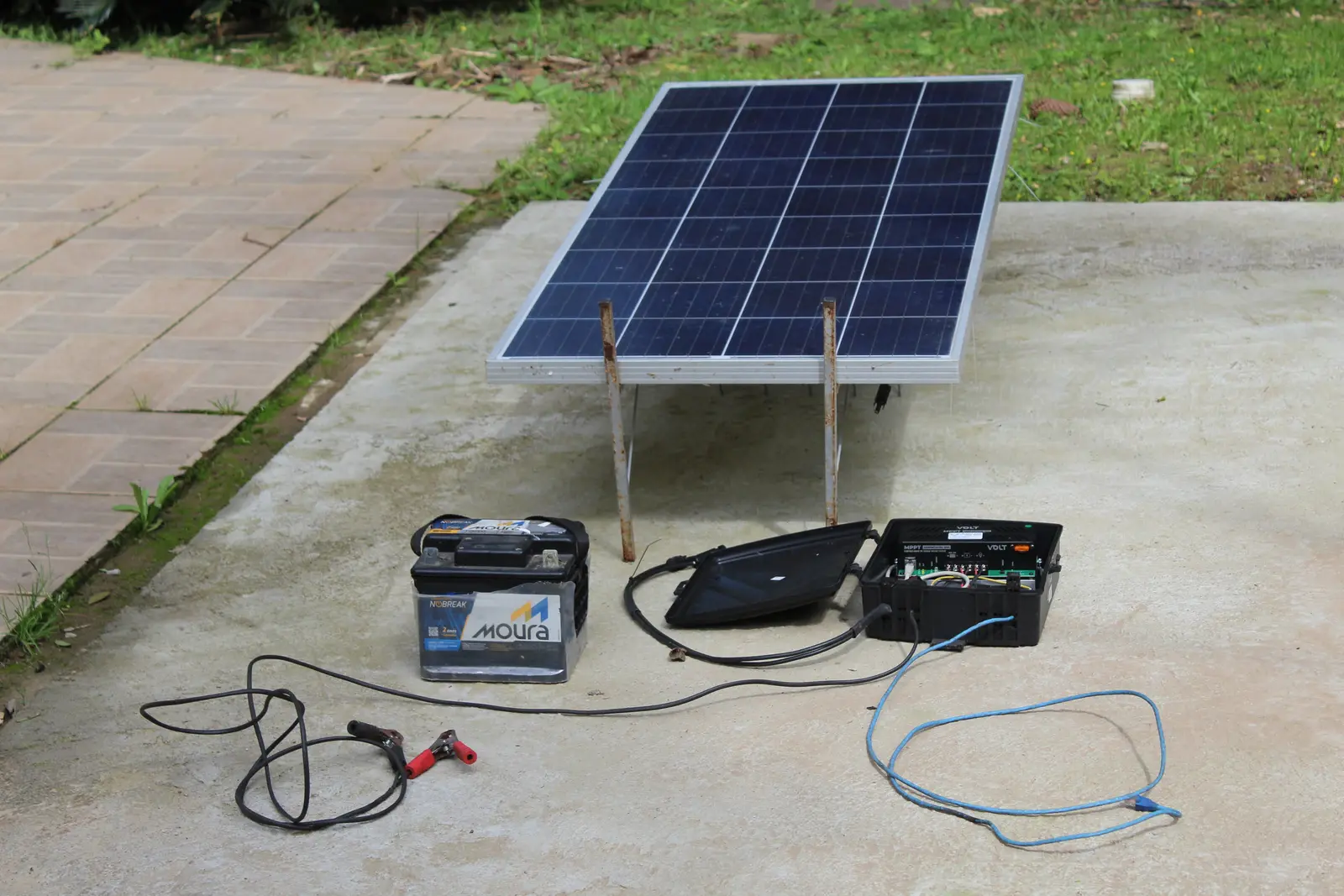
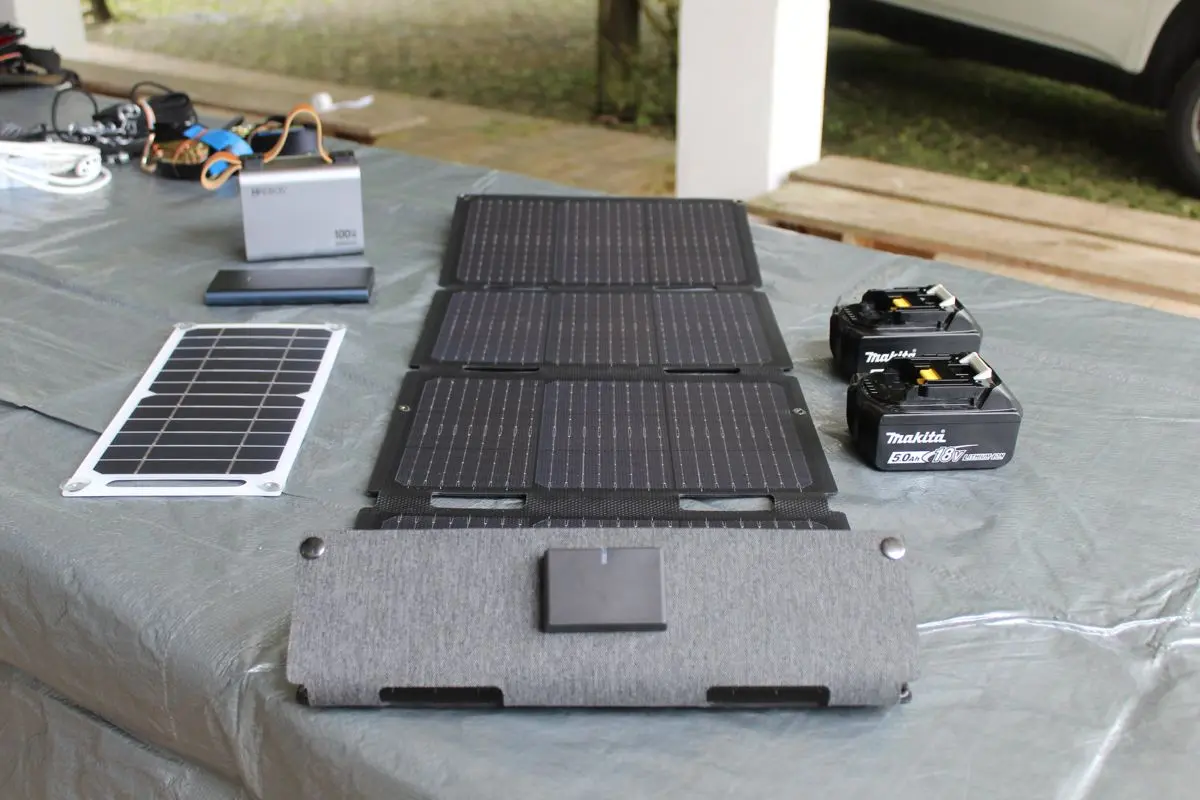
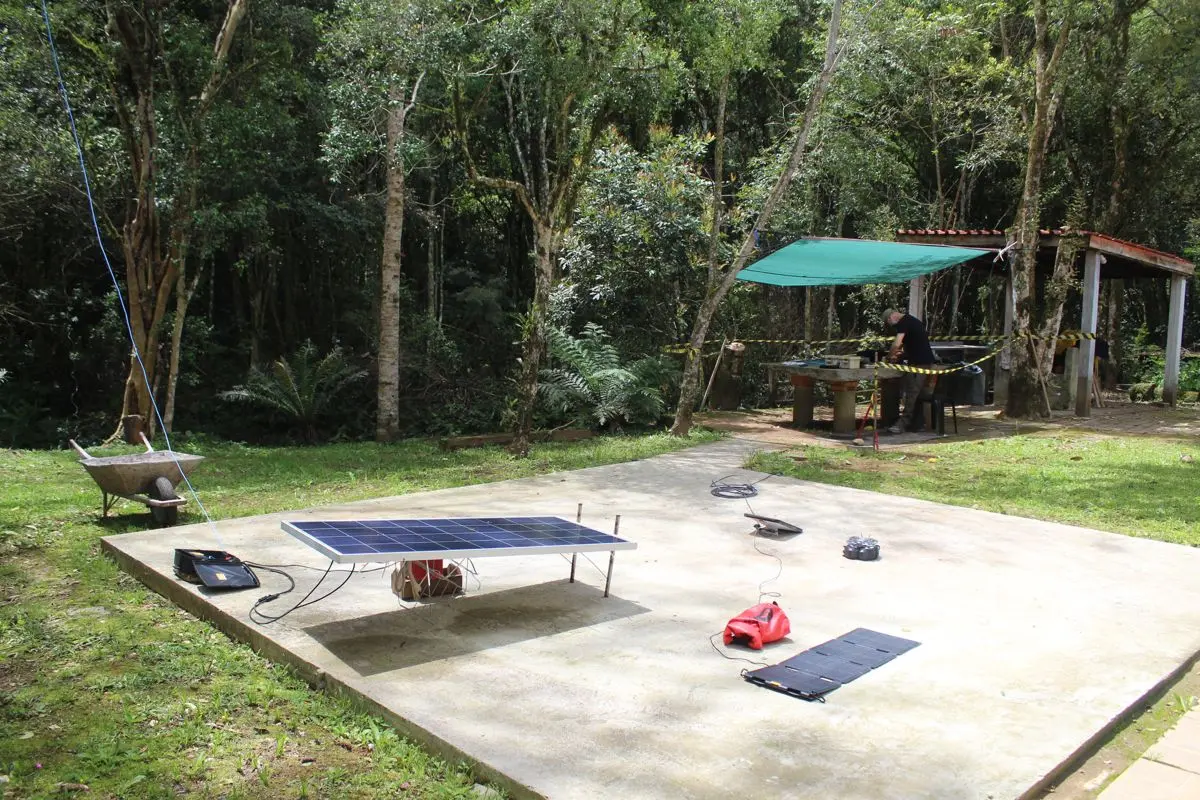
The decision was to have both, each with its own role. At the Base, which stays in a fixed place, we set up a solar kit with a 150 W panel, charge controller, battery and converters. For the field, we take light sources that one person can carry: a folding solar panel, power banks and tool batteries.
How do you choose sources that other people can replace?
The second dilemma was standardisation. Each device in the kit needs a different kind of power: the satellite antenna, the radios, the messaging devices, the drone. If each one had its own charger, losing a single cable would be enough to lose a piece of equipment.
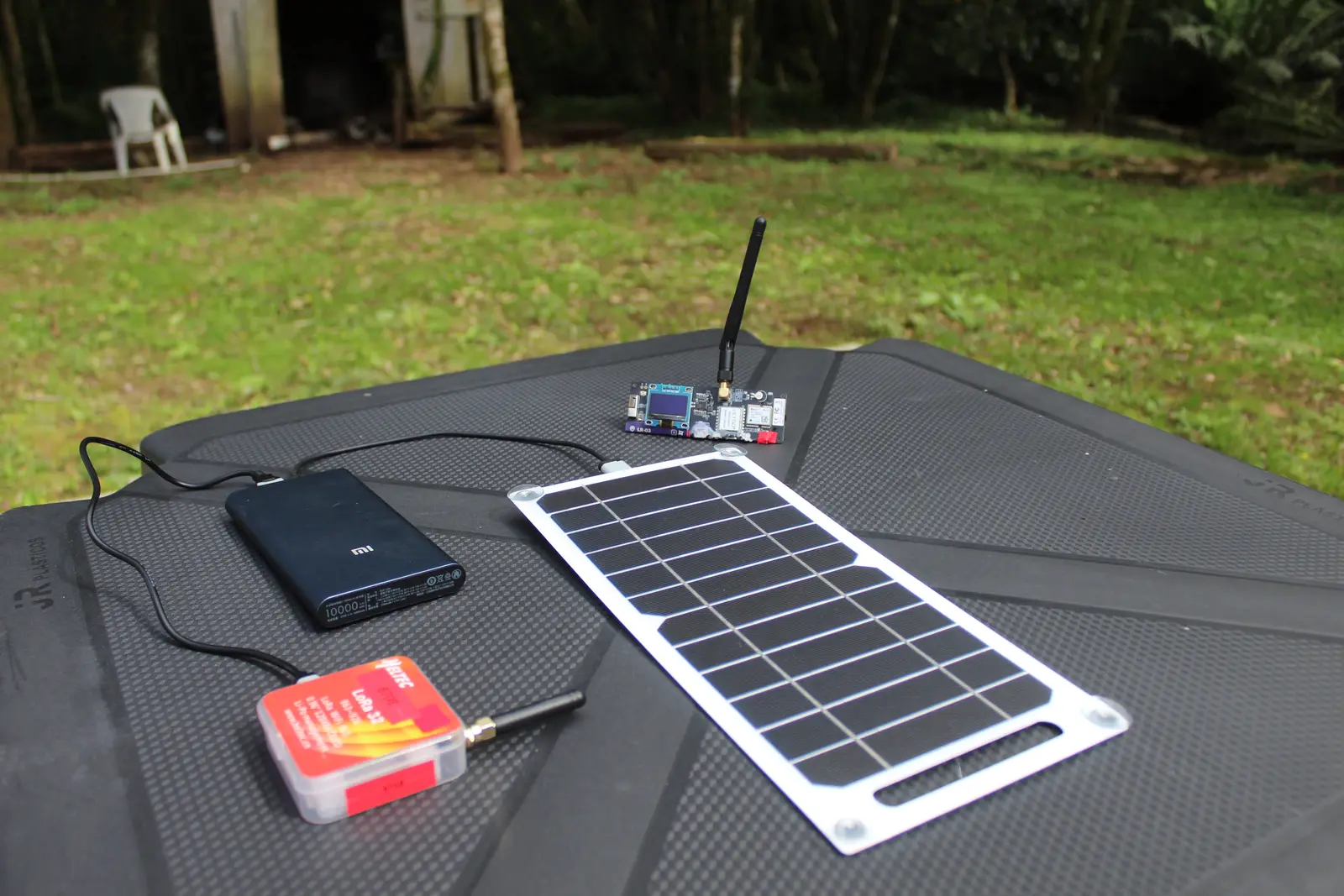
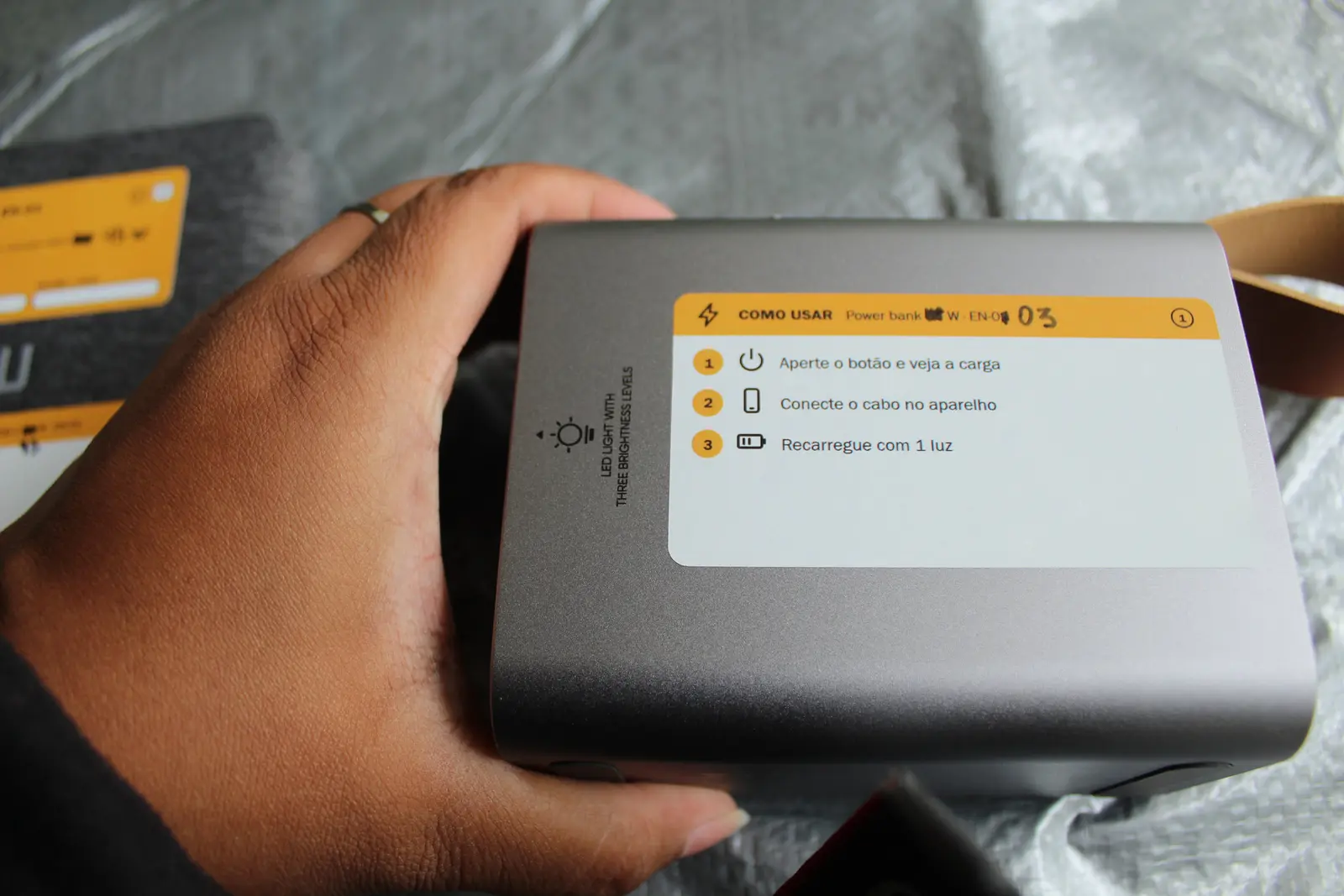
That is why we gave preference to two common outputs. The first is USB-C, which charges phones, power banks, the drone and the LoRa devices. The second is 18 V tool batteries, the same ones used in drills and electric saws. Many response teams, community groups and volunteers already have tools with these batteries and know where to recharge them.
How do you stop a mistake from burning out a piece of equipment?
The third dilemma was safety. The power that keeps everything running can also burn out a device or hurt someone. The kit has 12 V and 24 V outputs and an inverter that delivers mains power, at 127 or 220 V. A swapped cable burns out a device. In an emergency, it is hard to replace a part.
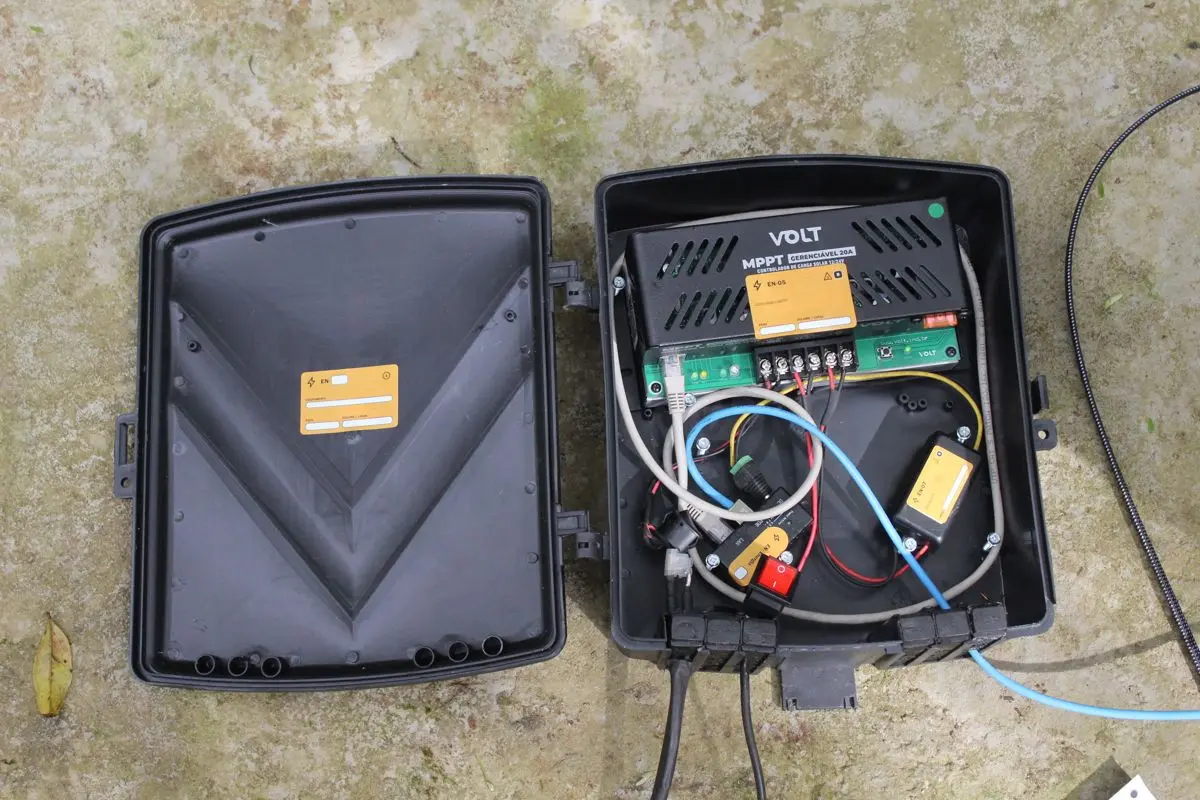
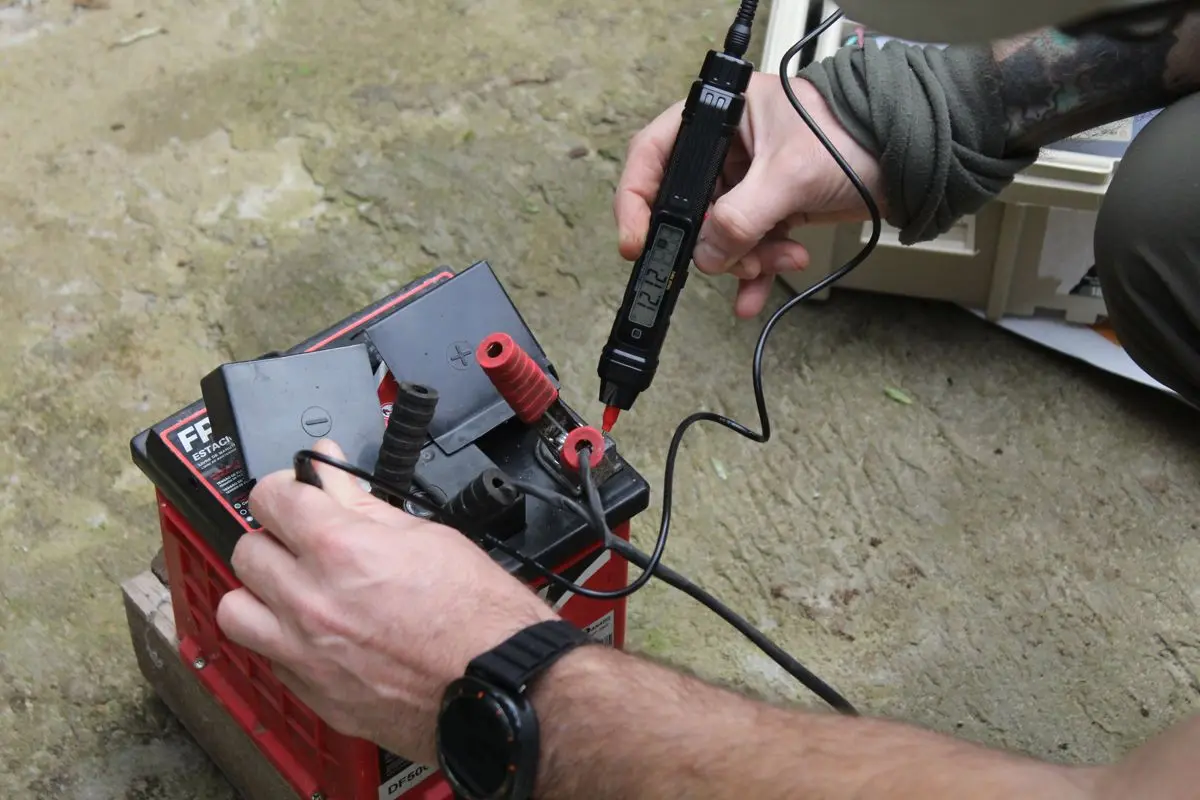
The team decided to protect the kit on three fronts. The controller and the converters were kept inside an airtight box, away from rain and dust. Before each connection, the voltage is measured with the multimeter. And each output was given a yellow sticker with the voltage and polarity, as well as hazard warnings where there is a risk of electric shock.
What went well in the field?
The kit kept running without the power grid throughout all the tests. The Base solar kit powered the Base equipment. The light sources recharged radios and messaging devices and served as a backup.
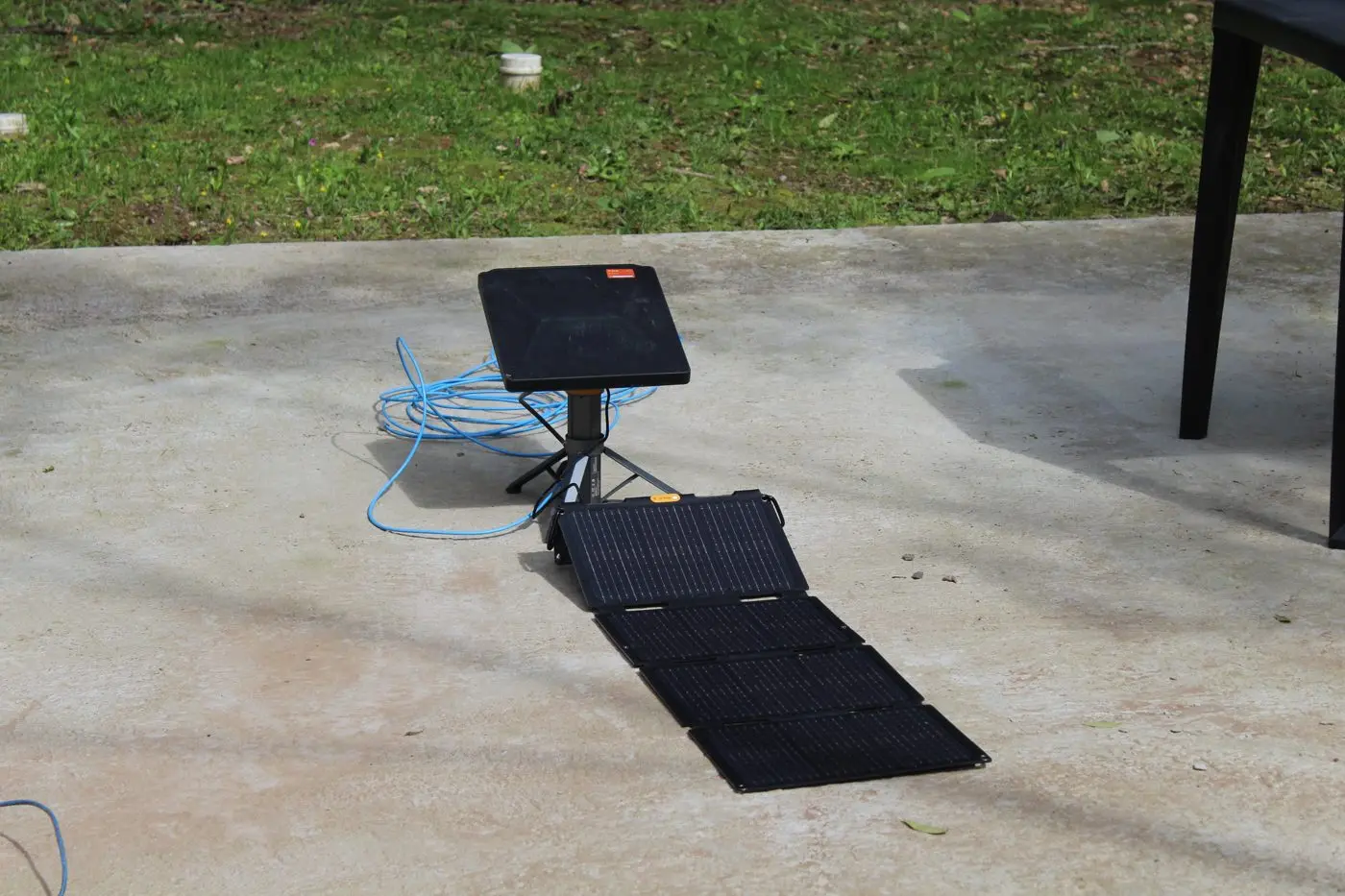
The satellite internet antenna, which needs constant power, was stable with the tool battery, with the folding solar panel and with a tripod power bank recharged by the sun. We describe this test in detail in the journal How do you take internet to an area with no signal?
And what went wrong?
Of the six ways of powering the equipment that we tested, only one failed. With a 100 W power bank and a 1-metre cable, the satellite antenna kept switching on and off non-stop. The decision was to take this combination out of the kit. The lesson goes beyond this device: the power rating written on the box does not guarantee that the source can handle equipment that draws peaks of power. Every combination of source, cable and device needs to be tested before it goes to an emergency.
In what order should everything be switched on?
From what the team did in practice came an activation order that is now part of the kit’s draft protocol. First come power and internet at the Base. Then the local Wi-Fi network, with the captive portal filled in with the real location of the Base. Last, the communications that go out with the teams: radios and LoRa messaging devices.
This order exists because each layer relies on the one before. The Wi-Fi network only carries internet if the antenna is on. And the antenna only stays on if the power holds up.
How do you look after the batteries between one emergency and the next?
Batteries are the main maintenance cost of the kit. What shortens their life most is not use in the field: it is heat and being stored discharged. A kit that spends months unused in a hot storeroom may fail on the very day it is needed. That is why the proposal is a routine every three months: charge and test the whole kit, stored in a ventilated, shaded place.
Who benefits from having your own power?
Search and rescue teams keep radios and messaging devices running for longer, without looking for a socket. The Base stays connected to the outside world even when the neighbourhood is in the dark. Humanitarian aid organisations can use the kit’s power to charge the phones of people who arrive at a shelter, one of the most common requests in those places. And a community that learns to set up the solar kit gains a structure that is also useful outside emergencies.
This is the logic of the PACE model, in which each communication layer is the backup for the one before. And no backup works without power.
To go further
See you next time!