In this series of Project Journals, we present the technologies we are investigating as part of a toolkit for rapid response to incidents and climate disasters. In an earlier journal, we explained what LoRa and the Meshtastic project are. Then we told you what we took into the field in Rio Grande do Sul. In this journal, we show what happened when the team moved away from the Base and tried to keep in touch through text messages.
What problem do text messages solve in a climate disaster?
In a flood, a rescue team in a boat finds a family on top of a roof. They need to tell the Base, but the street address no longer means anything: the signs are under water. What helps is the exact location. In a landslide, the people working on the slope need to report where the ground is still moving. In a windstorm, a whole community can lose signal because the mobile phone tower came down. In a fire, a brigade needs to receive the exit route while the fire changes direction.
In these cases, voice radio is fast, but the message is lost if nobody is listening at that moment. A text message is stored, can carry the sender’s position and does not depend on a live conversation. This is the gap that LoRa devices with Meshtastic fill in the kit.
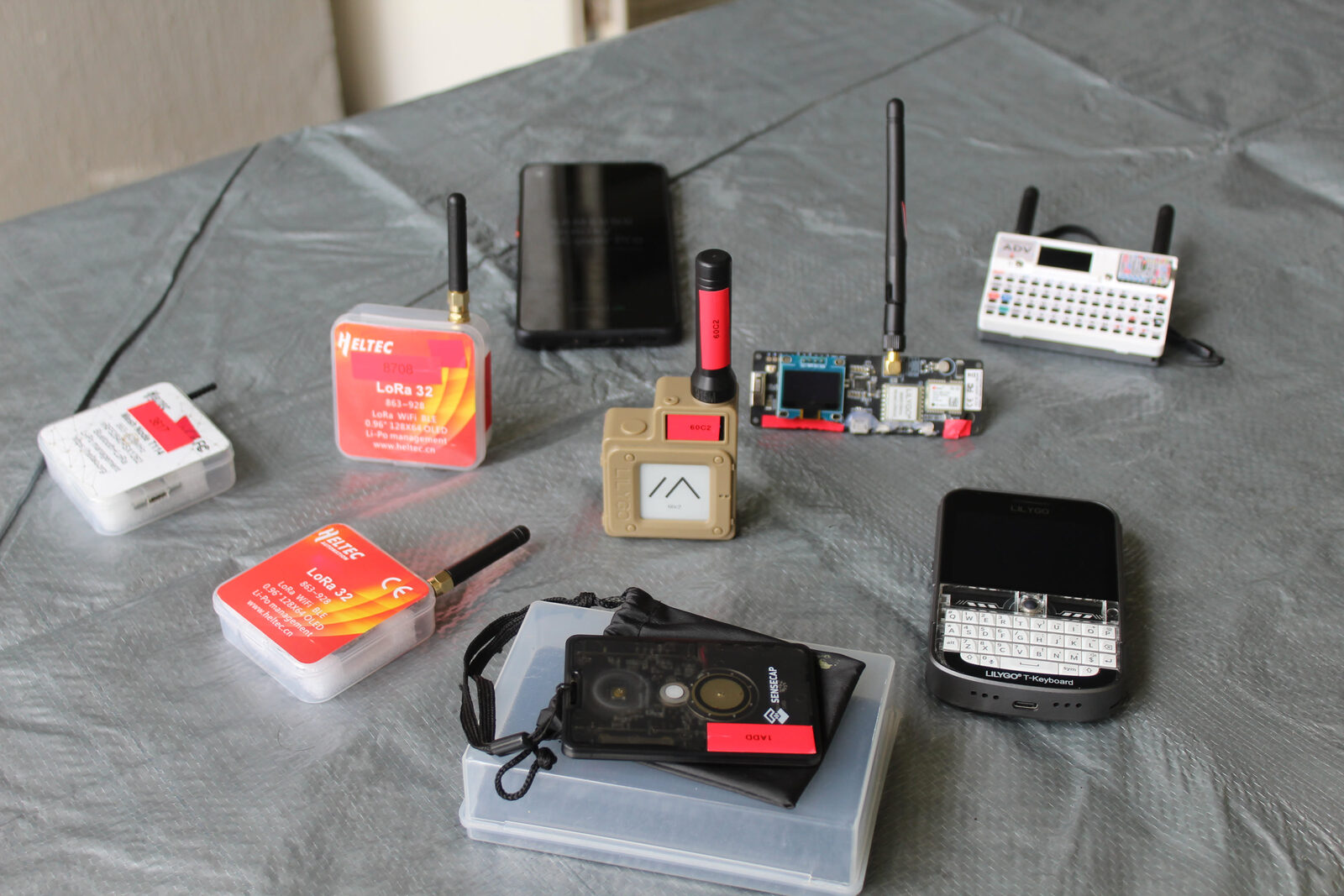
Which device goes with whom?
The first dilemma in the design was how to share out the devices. They are not all the same: some have a screen, one has a keyboard, another fits in a pocket and works on its own. The question was: who needs what, with their hands full and under pressure?
| Device | Where it goes | Why |
|---|---|---|
| LilyGO T-Beam | At the highest point of the Base | The higher it is, the farther the signal reaches |
| LilyGO T-Deck, with keyboard | At the Base, connected to a phone | Whoever stays at the Base writes and reads more messages |
| Heltec LoRa 32 (V3) and LilyGO T-Echo | At the Base, as control receivers | They confirm that the messages sent from the Base are actually travelling through the network. The T-Echo has an e-ink screen, which uses little battery and can be read in bright sunlight |
| SenseCAP T1000-E | With the rescue team | Sends the location with two presses of the button, without opening the phone |
We also decided that all devices run the same version of the software. In the field, one device was left on an earlier version and still talked to the others. But in an emergency nobody has time to find out whether a version difference is the cause of a failure.
How did the test go?
We ran two tests, on different days.
In the first, a device at the highest point of the Base sent automatic messages every so often. A team member took the car and drove towards the centre of Garibaldi, about 15 km away, carrying another device to receive the signal. The idea was to see at which points along the way the messages from the Base still arrived.
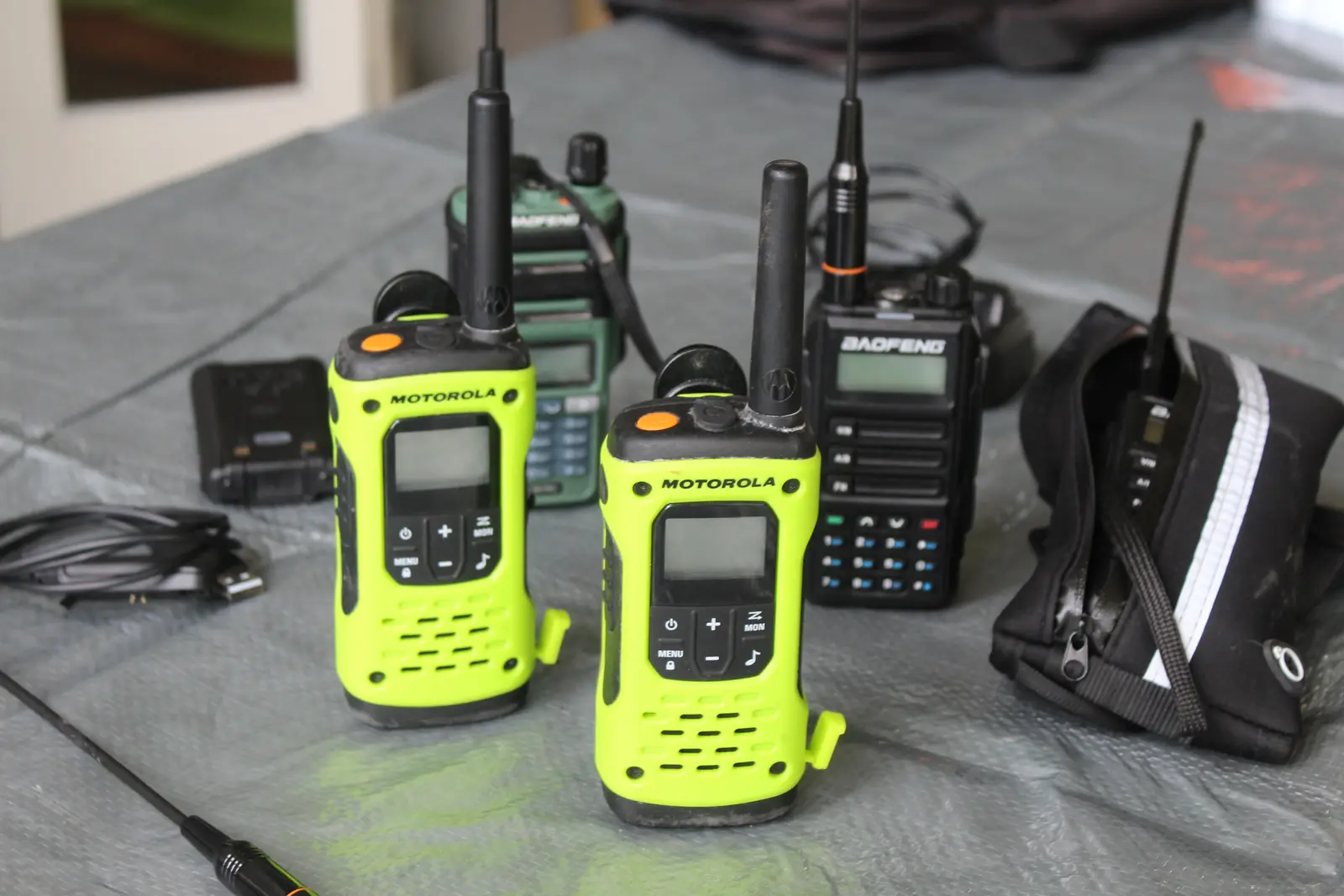
In the second, the team made a two-hour drive with 13 stops. At each stop, they checked two things: whether the Base heard their voice over the radio and whether it received their text over LoRa.
What went right?
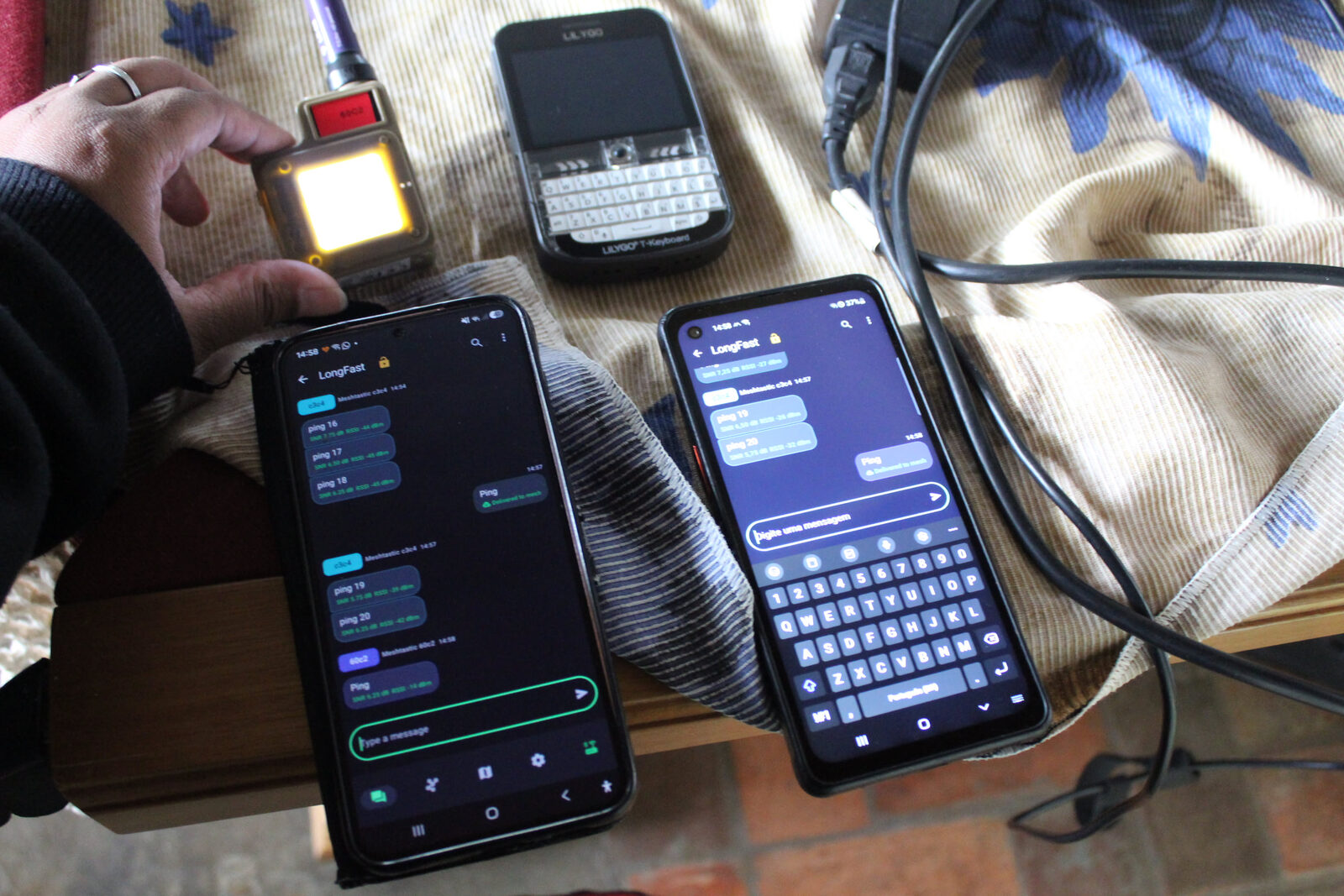
Messages followed the person for a good part of the way, while they were still in areas the Base could see from above. At the Base, the devices exchanged messages with each other with no noticeable delay.
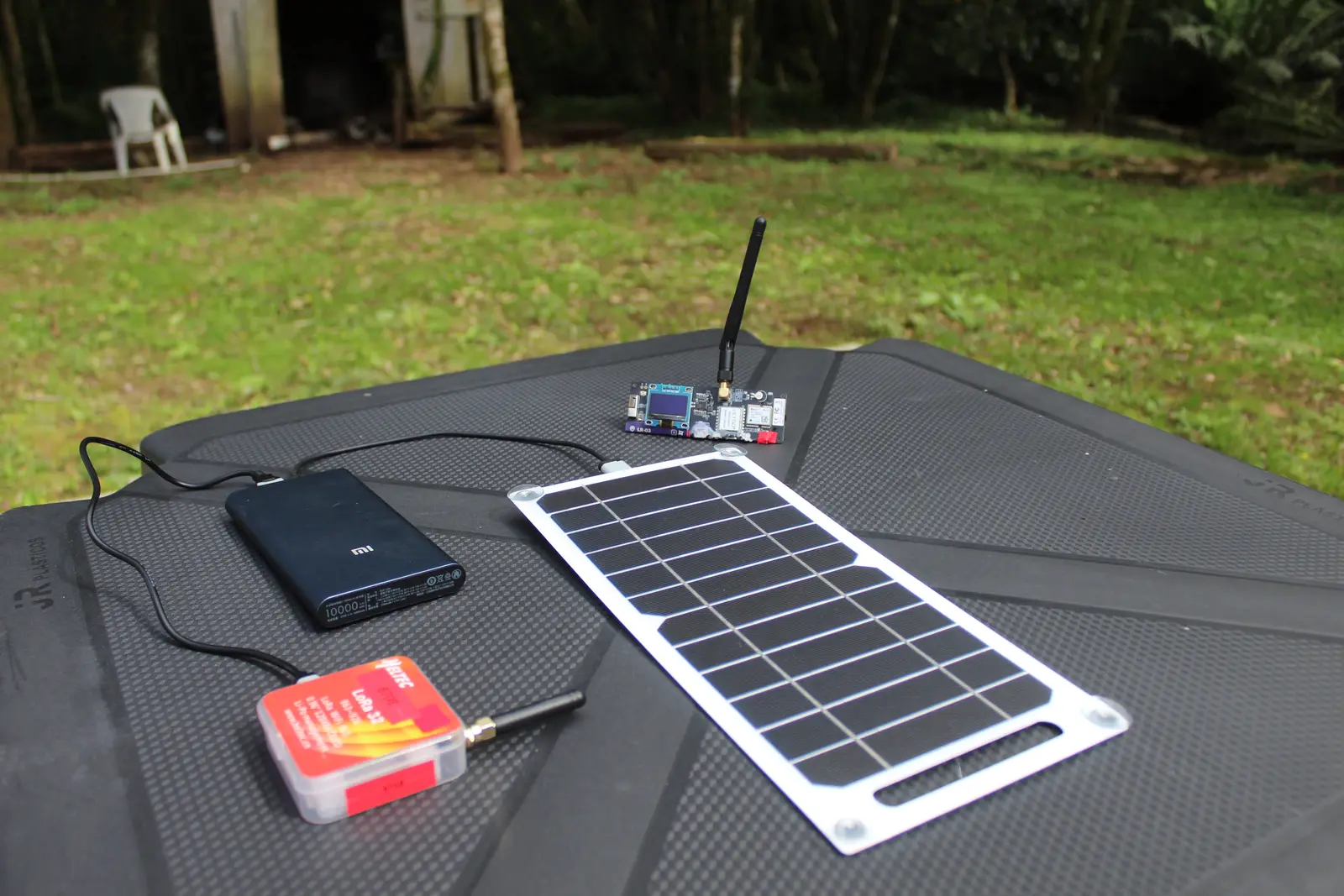
The devices also showed that they can stay on far from a wall socket. Since they use little power, a power bank and a small solar panel are enough to keep them running outdoors.
And what went wrong?
On the drive, voice reached the Base at all 13 stops. Text arrived at 9. The four stops without text were in valleys or at points with a hill between the car and the Base. When the road went down into the valley, the messages stopped arriving.
This weighs heavily in climate disasters. Valleys collect water in floods, receive the earth from landslides and can trap smoke in fires. They are also places where mobile signal tends to be weak even on normal days. Precisely where communication is most lacking, text had the most trouble.
What did we decide from this?
The first decision was to keep voice radio and Meshtastic together, at the same points in the area. Where text failed, voice got through. This works because the two fail for different reasons: they use different frequencies, equipment and batteries. A repeater going down cuts the radio’s range, but not the LoRa mesh. A LoRa device with a flat battery takes one point out of the mesh, but not the radio. This is the logic of the PACE model, in which each communication layer backs up the previous one.
The second was to recommend repeaters on high ground. The team estimates that about five devices installed on the hilltops would carry the messages all the way to the town centre. Each device costs between 18 and 45 dollars in the official stores, so it is a low-cost improvement.
Here another dilemma appears: the devices are cheap, but most of them come from abroad. Delivery takes 10 to 30 days and the version used in Brazil is often sold out. In addition, radio equipment needs Anatel approval. Before recommending a model to partner organisations, the certificate has to be checked. This matters even more for those who work with activists and human rights defenders, who cannot be exposed to seizure or fines. That is why the decision is to keep spare devices and check the approval of each model.
Could the internet bridge be automatic?
At the Base, one of the devices was connected to a phone with satellite internet. Whoever was there read the incoming messages and passed them on: to those coordinating the response, to humanitarian aid organisations or to family members. The LoRa network covered the area and the Base connected it to the rest of the world.
Meshtastic also lets the phone forward everything to the internet on its own, using a protocol called MQTT . It sounds more practical, but there is an important caveat: without encryption, messages and locations are exposed. Calls for help may contain names and addresses. In regions where fire is also used as a weapon in land disputes, knowing who is sending messages, from where and to whom can put community leaders, communities and land defenders at risk. That is why we decided that the automatic bridge should only be set up with a server of your own and encrypted messages, under the control of the organisation or the community.
Who benefits from this on the ground?
Search and rescue teams gain a way to send the exact position of people who need help, even without mobile signal. A community cut off by a landslide can ask for help and receive guidance by text. Humanitarian aid organisations receive, through the Base, written information on what is lacking in each place. And the Base can stay in a safe, high spot while keeping in touch with people working in the lower areas.
To go further
If you want to repeat the test or see the technical details, the project documentation has everything in reference form:
See you next time!