In this series of Project Journals, we present the technologies we are investigating as part of a toolkit for rapid response to incidents and climate disasters. In the journal on radio, we promised to talk about three topics: off-grid communication, situational awareness and SIGINT. The first two have already come out. This journal closes the series, but with a different focus from what the name promised: instead of signals intelligence, we talk about responsible listening.
Why listen and not just talk?
When a team arrives in an affected territory, it knows very little. In a flood, it does not know how high the water has risen or which bridges have collapsed. In a landslide, it does not know whether other slopes in the region are giving way. After a windstorm, it does not know which neighbourhoods have been cut off. In a fire, it does not know where the wind is taking the flames.
Many of these answers are on the air. Local stations broadcast news and warnings. Amateur radio operators pass on requests for help. Helicopters and planes working in the response communicate by radio. Listening to all of this helps the team understand the situation before deciding where to go. It is one piece of situational awareness.
Why did we change the name of the topic?
SIGINT is an abbreviation for signals intelligence. The term comes from the military world and from intelligence services, where it means picking up other people’s signals to obtain information about them.
This was the first dilemma of this journal. The name is well known and sums up the idea of extracting information from radio signals well. But it carries the idea of surveillance. A project that works with communities, community leaders and human rights defenders cannot present itself this way. A team with radios and antennas in the middle of an affected neighbourhood may already be viewed with suspicion.
The decision was to talk about responsible listening. The expression brings together two ideas that guided the design of this part of the kit.
The first is that listening is passive. The team only receives: it transmits nothing, does not interfere with anyone’s communications and does not try to get into closed channels. Whoever is listening does not appear on the air. That is why listening does not get in the way of the teams working in the response.
The second is responsibility for what is heard. Listening passively is not enough: a piece of information heard on the radio can protect a person or expose them. The team listens only to what was made to be heard and takes care with what it passes on, to whom and why.
What does the law allow us to listen to?
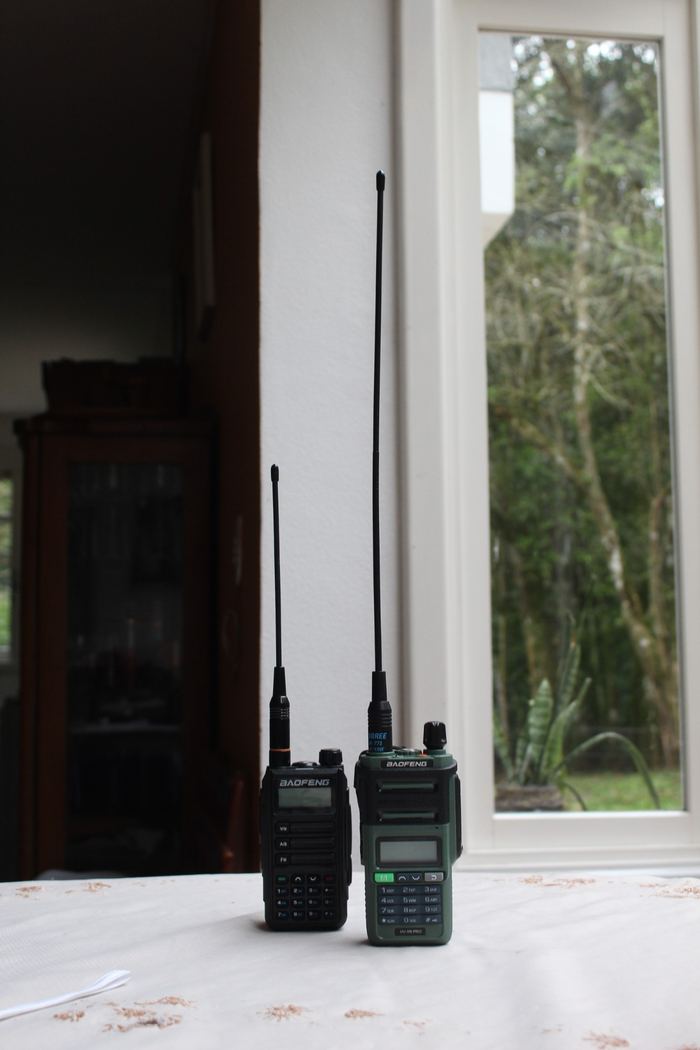
This was the second dilemma. Many radios, including the handheld ones we take to the field, can tune in to almost any frequency. But being able to tune in does not mean being able to use what you hear.
Brazilian law protects the secrecy of communications. What it punishes is not listening, but disclosing, passing on or using a communication addressed to someone else. It also leaves out of this prohibition communications made for the public, those of amateur radio operators, distress calls from ships and aircraft and transmissions in cases of public calamity.
In practice, the team can listen to radio stations and amateur radio networks and pass on what it heard. Police, fire brigade and health service radios, on the other hand, call for a different approach: what is heard there should not be recorded, published or passed on in messaging groups. We go into the laws and limits in detail in the explanation of responsible listening in climate disasters.
What is worth listening to?
Local stations. When power and the internet go down, AM and FM radio is often the source of information that remains. A battery-powered 5-band radio receiver was added to the kit for this purpose.
Amateur radio emergency networks. In the 2024 floods in Rio Grande do Sul, with most repeaters without power, amateur radio operators in the region used a common frequency to point out people who needed rescue. Listening to these networks helps search and rescue teams know where there are requests for help. It also helps to organise those who are already responding.
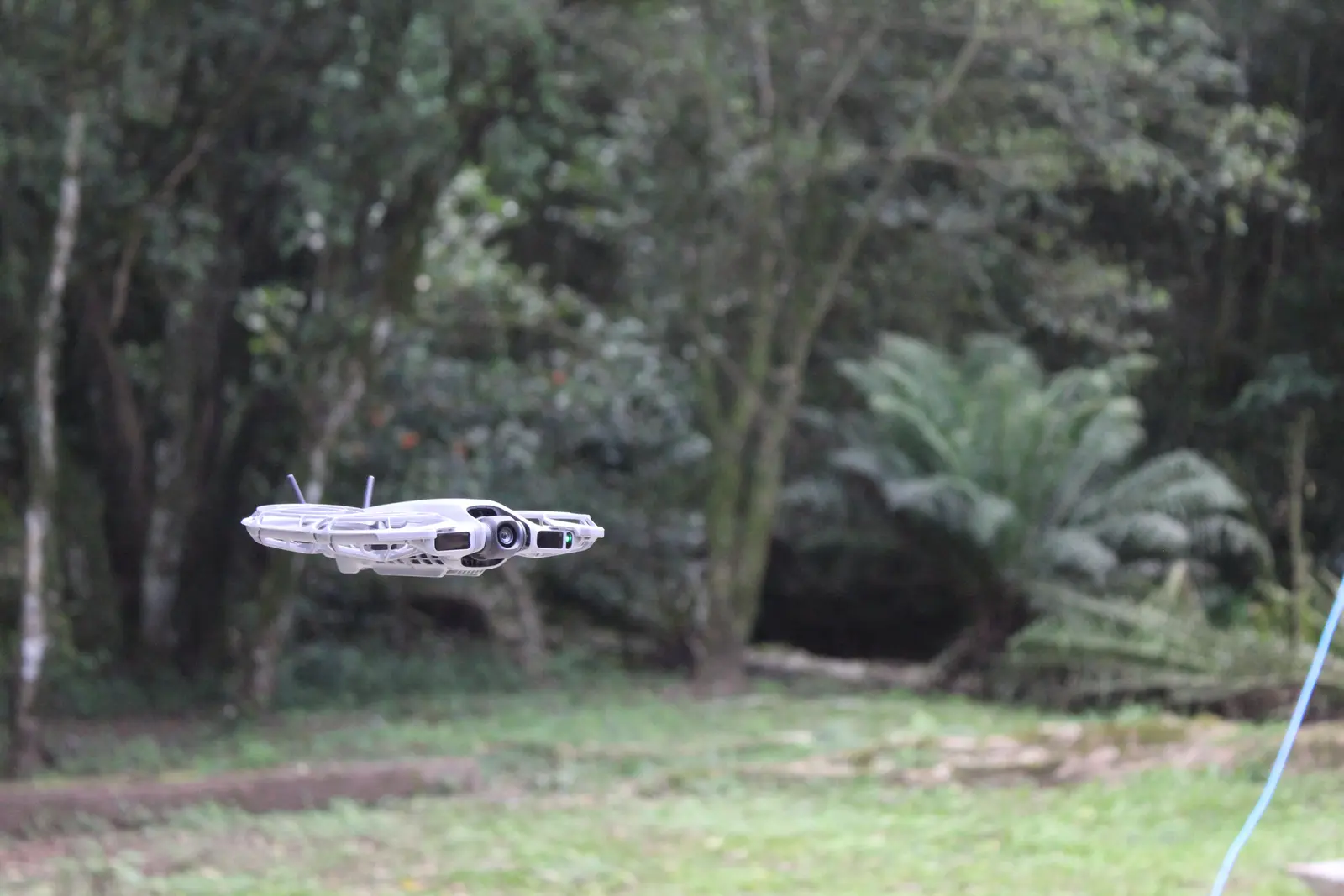
The sky. Before flying the drone, listening to the aviation band helps to know whether rescue helicopters or firefighting planes are operating nearby. This does not replace flight authorisation, but it avoids putting a drone in the path of an aircraft that is saving lives.
What about the SDR radio?
The third dilemma was deciding whether it was worth adding an SDR radio to the kit. SDR stands for software-defined radio: a small USB receiver, the size of a USB stick, connected to a laptop or mobile phone. A free software program does the work of tuning and shows on screen which frequencies are in use.
The SDR was not taken to the field for testing in this project. That is why what we say about it comes from research. It picks up a wide range of frequencies. As it only receives signals, it fits the idea of passive listening: there is no risk of the team transmitting by mistake. In a climate disaster response, it makes it possible to see which channels are busy before programming the team’s radios, to follow the position of aircraft and to listen to emergency networks.
But it also has limits. It needs a suitable antenna, drains the battery of the mobile phone or laptop and requires training to understand what appears on the screen. It also does not reach Wi-Fi frequencies. And many models are imported, with no identified certification.
The decision was to treat it as an extra tool for those in the team who already operate radio, without replacing the 5-band radio receiver. Anyone can switch on and use an ordinary receiver. The SDR depends on someone with practice.
What makes listening responsible?
In a climate disaster, a call for help over the radio may include a family’s name, their address and who is injured. This information needs to reach those who can help, but it cannot circulate freely. Passive listening ensures that the team does not interfere with the radio. The responsibility lies in what it does afterwards with what it heard. That is why we decided that listening follows a few rules:
- note down only what serves the response, such as the location and the type of help, without the names of affected people;
- do not record or publish public safety communications;
- never use listening to track community leaders or movements in the territory;
- tell the community what the team is doing with the radios.
Who benefits from this listening?
Search and rescue teams find out faster where there are requests for help and which roads are closed. Humanitarian aid organisations follow warnings from local stations to decide where to set up a support point. The community receives, through the Base, information that might not otherwise reach it. And whoever operates the drone flies more safely, knowing what is in the sky.
To go further
See you next time!